Reviewed by the HyaluFlow Health Editorial Team | Published: July 7, 2026 | Last Updated: August 26, 2026
Your skin barrier helps keep water inside while limiting the entry of irritants, allergens, and microbes. Nutrition cannot repair it overnight, but a varied diet supplies nutrients needed for normal skin renewal, lipid production, and tissue repair.
Quick Answer: No single food can repair a damaged skin barrier. Fatty fish, nuts, seeds, fruits, vegetables, protein-rich foods, and fermented foods can provide nutrients that support normal skin structure, while correcting nutrient deficiencies is more important than relying on supplements.
Key Takeaways
- The skin barrier depends on ceramides, cholesterol, and fatty acids.
- Protein, healthy fats, vitamins, and minerals support normal repair.
- Fatty fish, produce, nuts, seeds, and protein-rich foods are useful choices.
- Diet supports skin health but does not replace appropriate skincare.
- Supplements are most useful when a deficiency or specific need exists.
What Is the Skin Barrier?
The outermost skin layer, the stratum corneum, forms a major part of the body's protective barrier. Its structure depends on organized lipids, especially ceramides, cholesterol, and free fatty acids, as described in The Skin Barrier: An Extraordinary Interface With an Exceptional Lipid Organization.
When barrier function is impaired, water loss can increase and skin may become dry, irritated, or sensitive. A review in Diet and Skin Barrier: The Role of Dietary Interventions on Skin Barrier Function notes that nutrition may influence skin hydration and barrier-related measures.
Can Food Support Skin Repair?
Yes, but diet is only one piece of the puzzle. Nutrients provide building blocks for cell renewal, lipid metabolism, collagen formation, immune function, and tissue repair.
Research on wound healing shows that poor nutritional status can affect inflammation and collagen synthesis. Nutrition and Cutaneous Wound Healing emphasizes correcting nutritional problems rather than assuming extra supplements automatically improve healing.
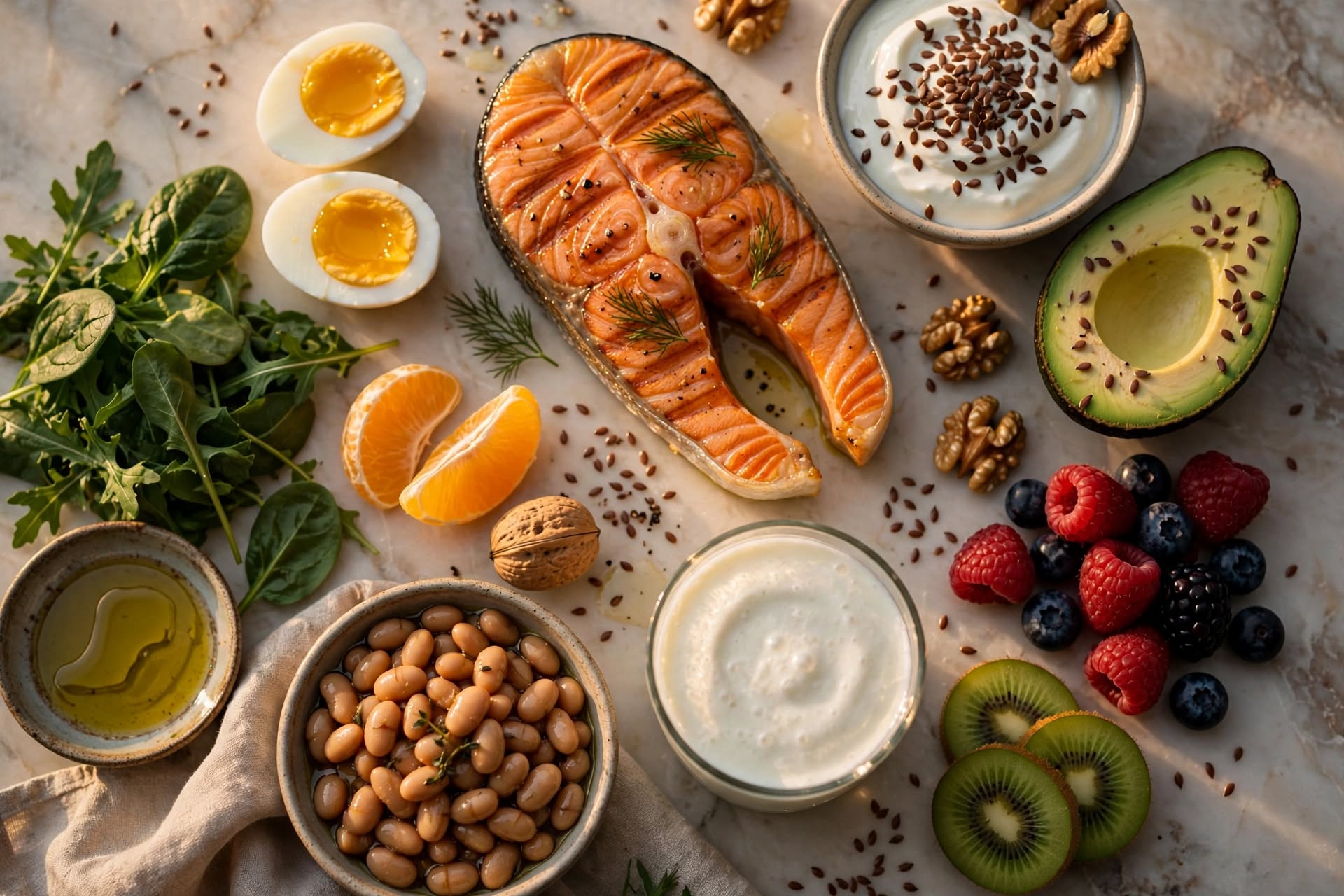
7 Foods Worth Including
1. Fatty Fish
Salmon, sardines, trout, and mackerel provide EPA and DHA omega-3 fatty acids. Dietary research suggests fatty acids may influence skin-barrier function, although evidence for specific skin conditions remains mixed, according to Diet and Skin Barrier.
2. Walnuts and Flaxseed
Walnuts and ground flaxseed provide plant-based alpha-linolenic acid, plus fiber and other nutrients. They are useful additions to a varied diet, although ALA is not equivalent to the EPA and DHA supplied by fish.
3. Colorful Fruits and Vegetables
Oranges, berries, kiwi, peppers, and leafy greens provide vitamin C and carotenoids. Vitamin C is required for collagen synthesis, with its role in tissue repair discussed in Biomolecular and Cellular Effects in Skin Wound Healing.
4. Protein-Rich Foods
Fish, eggs, poultry, dairy, beans, and lentils provide amino acids needed for tissue maintenance and repair. Adequate protein is particularly important during healing or when nutritional intake is inadequate, as discussed in Nutritional Support for Wound Healing.
5. Fermented Foods
Yogurt with live cultures, kefir, kimchi, and sauerkraut can contribute to dietary diversity and gut microbial health. The gut-skin relationship is biologically plausible, but direct skin-barrier benefits remain uncertain, as reviewed in The Role of Probiotics in Skin Health and Related Gut-Skin Axis.
6. Nuts, Seeds, and Avocado
These foods provide unsaturated fats, vitamin E, minerals, and other nutrients. They are best viewed as parts of a nutrient-dense diet, not proven treatments for barrier damage.
7. Extra Virgin Olive Oil
Extra virgin olive oil provides monounsaturated fat and polyphenols and is central to Mediterranean-style eating. A review in Is Extra Virgin Olive Oil the Critical Ingredient Driving the Health Benefits of a Mediterranean Diet? supports its role within healthy dietary patterns.
Key Nutrients for Skin Health
| Nutrient | Role | Food Sources |
|---|---|---|
| Protein | Provides amino acids for repair | Fish, eggs, beans, yogurt |
| Omega-3 fats | Support lipid and inflammatory pathways | Fish, walnuts, flaxseed |
| Vitamin C | Supports collagen synthesis | Citrus, berries, peppers |
| Vitamin E | Provides antioxidant protection | Nuts, seeds, avocado |
| Zinc | Supports tissue repair | Seafood, meat, legumes |
Zinc deserves special attention when deficiency is present. Zinc and Wound Healing: A Review of Zinc Physiology and Clinical Applications links zinc deficiency with impaired healing but does not support indiscriminate supplementation.
What About Sugar and Processed Foods?
Evidence is stronger for overall dietary patterns than for blaming individual foods. A diet dominated by highly processed foods can displace protein, fiber, vitamins, minerals, and healthy fats.
Rather than banning foods, prioritize minimally processed choices and keep added sugars and heavily processed foods moderate.
Common Myths
Myth: One food can repair a damaged barrier.
Fact: Barrier health depends on nutrition, skincare, environment, genetics, and underlying conditions. No single food has been proven to rapidly repair damaged skin.
Myth: Supplements are better than food.
Fact: Supplements can help when deficiencies exist, but high doses are not automatically beneficial.
Myth: Probiotics directly fix the skin barrier.
Fact: The gut-skin connection is an active research area, but direct clinical evidence remains limited.
Who Should Pay Attention?
People following restrictive diets, experiencing poor appetite, or recovering from wounds should pay particular attention to adequate calories, protein, vitamins, and minerals. Persistent dryness, burning, cracking, or inflammation may indicate dermatitis or another condition rather than simple nutritional deficiency.
What the Science Says
Good nutrition can support normal skin structure and repair, but food is not a substitute for barrier-focused skincare or treatment of an underlying disorder. A review of dietary interventions found that nutrition may influence skin-barrier function while emphasizing the need for stronger human research.
Evidence Strength Summary
| Claim | Evidence |
|---|---|
| Adequate nutrition supports repair | Strong biological rationale |
| Diet influences barrier function | Limited to moderate |
| Protein supports tissue repair | Strong evidence in healing |
| Zinc deficiency impairs healing | Strong evidence |
| Fermented foods directly repair barriers | Insufficient evidence |
Bottom Line
Your skin needs adequate nutrition to maintain and repair itself, but there is no magic food for a damaged barrier. Build meals around protein, healthy fats, fruits, vegetables, nuts, seeds, and other minimally processed foods.
Pair good nutrition with gentle cleansing, moisturizer, and sun protection. If symptoms persist or become severe, identify the underlying cause rather than trying to solve the problem with food alone.