The term skin microbiome has rapidly become one of the biggest trends in skincare, but it's far more than a marketing buzzword. Scientific research now shows that the billions of bacteria, fungi, viruses, and other microorganisms living on your skin play an essential role in maintaining skin health.
A healthy skin microbiome supports your protective barrier, regulates immune responses, reduces inflammation, and even influences how well your skincare products perform. When this ecosystem becomes imbalanced—a condition known as dysbiosis—the risk of acne, eczema, rosacea, sensitivity, and irritation increases.
The skin microbiome is the community of beneficial microorganisms living on your skin. A balanced microbiome strengthens the skin barrier, supports immune function, reduces inflammation, and helps protect against harmful bacteria. Gentle skincare, avoiding excessive cleansing, and using microbiome-friendly ingredients can help maintain its balance.
- Your skin hosts trillions of beneficial microorganisms.
- A healthy microbiome supports the skin barrier and immune defense.
- Over-cleansing and excessive exfoliation can disrupt microbial balance.
- Prebiotics and postbiotics have stronger cosmetic evidence than live probiotics.
- Microbiome-friendly skincare focuses on supporting—not sterilizing—the skin.
What Is the Skin Microbiome?
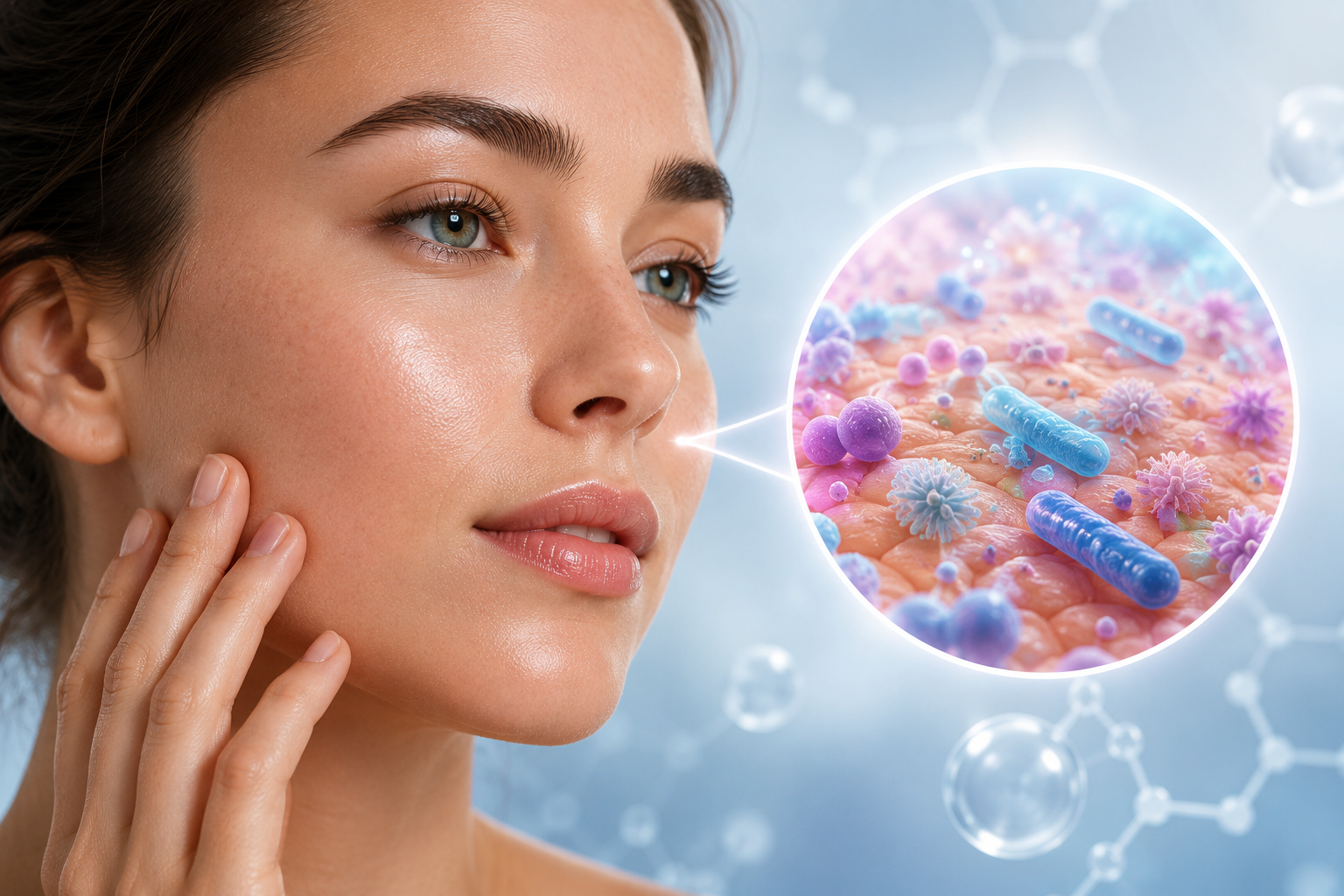
The skin microbiome refers to the complex ecosystem of bacteria, fungi, viruses, and microscopic organisms naturally living on your skin. Rather than causing disease, most of these microorganisms work together to protect the skin.
Healthy skin commonly contains species such as Staphylococcus epidermidis, Cutibacterium acnes, and various fungi that exist in balance. These microbes compete against harmful pathogens, produce antimicrobial substances, and help educate the immune system.
Research published in Nature Reviews Microbiology and the Journal of Investigative Dermatology shows that microbial diversity contributes to healthier skin barrier function and immune regulation.
Why Dermatologists Are Paying More Attention
For decades, skincare focused primarily on removing oil and bacteria. Modern research has shown that eliminating bacteria indiscriminately may actually damage the skin's natural defenses.
Dermatologists now recognize that maintaining microbial balance may improve inflammatory skin conditions including:
- Acne vulgaris
- Atopic dermatitis (eczema)
- Rosacea
- Sensitive skin
- Seborrheic dermatitis
Rather than sterilizing the skin, many experts now recommend preserving its natural ecosystem whenever possible.
How the Skin Microbiome Protects Your Skin
Your skin microbiome performs several important functions:
- Supports the skin barrier to reduce moisture loss.
- Produces antimicrobial peptides that inhibit harmful bacteria.
- Regulates inflammatory immune responses.
- Helps maintain a healthy skin pH.
- Reduces colonization by disease-causing microorganisms.
These functions work together to improve skin resilience and recovery.
How Skincare Routines Can Disrupt It
Many common skincare habits unintentionally disturb the microbiome.
- Harsh sulfate cleansers
- Over-exfoliation with AHAs, BHAs, or scrubs
- Frequent antibacterial products
- Overuse of alcohol-based toners
- Excessive washing
Repeated disruption can damage the skin barrier, alter pH, and reduce microbial diversity, increasing irritation and inflammation.
Prebiotics vs Probiotics vs Postbiotics
| Type | What It Is | Main Benefit |
|---|---|---|
| Prebiotics | Nutrients that feed beneficial skin bacteria | Supports existing microbiome |
| Probiotics | Live beneficial microorganisms | Limited stability in cosmetic products |
| Postbiotics | Beneficial compounds produced by bacteria | Supports barrier repair and reduces irritation |
Among cosmetic ingredients, postbiotics often provide the greatest formulation stability because they do not require live bacteria to remain effective.
4 Evidence-Based Ways to Support Your Skin Microbiome
- Cleanse gently. Wash your face once or twice daily using a mild, pH-balanced cleanser.
- Avoid excessive exfoliation. Give your skin recovery days between strong acids or retinoids.
- Choose microbiome-friendly ingredients. Look for bifida ferment lysate, lactobacillus ferment, thermal spring water, ceramides, glycerin, and niacinamide.
- Don't overuse antibacterial products. Healthy skin depends on beneficial microbes as much as protection from harmful ones.
What the Science Says
Multiple studies demonstrate that skin microbial diversity influences immune function, inflammation, wound healing, and barrier integrity. Emerging research suggests microbiome-targeted skincare may help support conditions such as eczema and sensitive skin, although more long-term clinical trials are still needed before many cosmetic claims can be confirmed.
Current evidence is strongest for gentle cleansing, barrier repair, moisturization, and maintaining microbial diversity rather than attempting to add large amounts of live bacteria through skincare products.
Common Myths
- Myth: All bacteria on the skin are harmful.
Fact: Most are beneficial and protect your skin. - Myth: Stronger cleansers always produce healthier skin.
Fact: Excessive cleansing often damages the microbiome. - Myth: Every probiotic skincare product contains live bacteria.
Fact: Many products actually contain bacterial ferments or postbiotics.
Who Should Pay Attention?
- People with eczema
- Individuals with rosacea
- Those with acne-prone skin
- Anyone experiencing sensitive skin
- People using multiple active ingredients
Evidence Strength
Overall evidence: Moderate to Strong. The importance of the skin microbiome in maintaining barrier function and regulating inflammation is well supported by scientific literature. However, evidence for many commercially marketed microbiome skincare products remains limited, and additional randomized clinical trials are ongoing.
Bottom Line
Your skin microbiome is an active part of your body's defense system—not simply a layer of bacteria. Supporting this ecosystem through gentle cleansing, barrier-friendly skincare, and avoiding unnecessary antibacterial products may improve skin resilience and reduce irritation over time. Healthy skin isn't sterile; it's balanced.
Medical References
- Byrd AL, Belkaid Y, Segre JA. The human skin microbiome. Nature Reviews Microbiology. 2018.
- Grice EA, Segre JA. The skin microbiome. Nature Reviews Microbiology. 2011.
- Sanford JA, Gallo RL. Functions of the skin microbiota. Journal of Investigative Dermatology. 2013.
- National Eczema Association. Skin microbiome and eczema.
- American Academy of Dermatology. Skin care recommendations for maintaining the skin barrier.