Reviewed by the HyaluFlow Health Editorial Team | Published: July 4, 2026 | Last Updated: August 27, 2026
Quick Answer
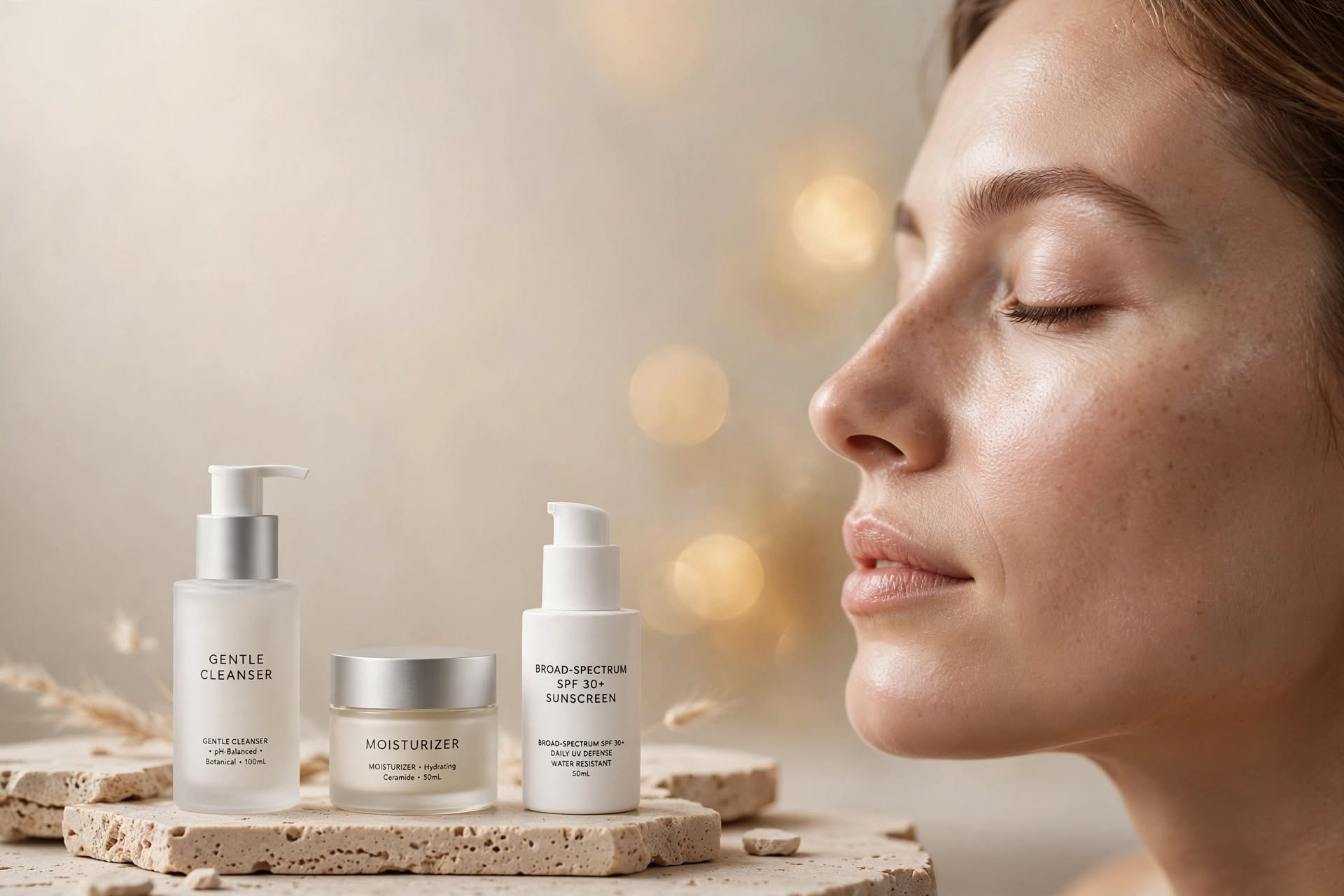
For many people, a simple skincare routine can cover the basics: a gentle cleanser, moisturizer, and broad-spectrum SPF 30+ sunscreen. Additional products are optional and should target a specific skin concern rather than add unnecessary steps.
Key Takeaways
- More skincare products do not automatically mean better results.
- Gentle cleansing, moisturizing, and sun protection form a strong foundation.
- Targeted treatments can help with concerns such as acne or pigmentation.
- Adding products gradually makes irritation easier to identify.
Why Too Many Skincare Products Can Backfire
A longer routine creates more opportunities for irritation, especially when several active ingredients are used together. The American Academy of Dermatology notes that using too many products can irritate skin.
American Academy of Dermatology: “Should I apply my skin care products in a certain order?” provides guidance on using skincare products effectively and avoiding unnecessary complexity.
What Is the Minimum Skincare Routine?
There is no medically fixed number of products everyone needs. A practical minimalist skincare routine usually starts with gentle cleansing, moisturizer when needed, and daily broad-spectrum sunscreen with SPF 30 or higher.
The AAD recommends broad-spectrum SPF 30+ sunscreen for protection against UV-related skin damage. “How to Select a Sunscreen” explains what to look for when choosing sunscreen.
Do You Really Need Serums and Actives?
Not necessarily. Serums, exfoliants, retinoids, and other treatments can be useful when they address a specific concern, but they are not automatically essential for healthy skin.
For example, acne may require targeted treatment rather than simply adding more cosmetic products. The AAD’s “Acne: Diagnosis and Treatment” explains that acne treatment depends on its type and severity.
The Smarter Approach to Skinimalism
The goal should not be owning the fewest products possible. A better strategy is choosing products with a clear purpose that suit your skin while avoiding unnecessary duplication.
Multi-purpose formulas can also reduce routine complexity. The American Academy of Dermatology provides practical guidance on keeping skincare routines simple and consistent in “A Dermatologist’s Guide to Skincare”.
How to Add Products Without Irritating Your Skin
Introduce new skincare products one at a time instead of changing your entire routine overnight. This makes it easier to identify which product is helping or causing a reaction.
When appropriate, testing a product on a small area first can help identify potential irritation or allergic reactions. AAD: “How to Test Skin Care Products” explains how to test skincare products safely.
Common Myths About Minimalist Skincare
Myth: Fewer products always mean healthier skin.
Reality: Simplicity can reduce unnecessary irritation, but some skin conditions need targeted treatment.
Myth: Everyone needs a 10-step routine.
Reality: A complicated routine is not required for healthy skin. Consistency with appropriate basics matters more.
Myth: If your skin reacts, add another product.
Reality: Irritation can be a reason to simplify and identify the trigger rather than adding more products.
Who Should Pay Attention?
Skinimalism may be useful if your routine contains many overlapping products, your skin frequently feels irritated, or you cannot tell which products are helping.
However, persistent acne, eczema, significant pigmentation, painful inflammation, or unexplained rashes should not be managed through minimalism alone. A dermatologist can determine whether medical treatment is appropriate.
Action Steps
- Start with a gentle cleanser suited to your skin.
- Use a moisturizer when your skin needs hydration or barrier support.
- Apply broad-spectrum SPF 30+ sunscreen during daytime sun exposure.
- Add one targeted treatment only when you have a specific reason.
- Introduce new products gradually rather than changing everything at once.
- If irritation develops, simplify and reassess instead of adding more products.
What the Science Says
Current dermatology guidance supports a focused approach rather than simply adding more products. Gentle cleansing, moisturization, sun protection, and appropriate targeted treatments form the core of evidence-based skincare.
Evidence Strength Summary
Strong: Broad-spectrum SPF 30+ sunscreen helps protect skin from UV damage. Strong: Evidence-based treatments are appropriate for conditions such as acne. Moderate: Removing unnecessary products can reduce exposure to potential irritants, although the ideal routine varies by individual skin type and condition.
Bottom Line
Minimalist skincare does not mean abandoning skincare. It means removing products that have no clear purpose while keeping the essentials that protect and support your skin.
For many people, a gentle cleanser, moisturizer when needed, and broad-spectrum SPF 30+ sunscreen provide a sensible foundation. Add targeted treatments only when your skin has a specific need.