Azelaic Acid: What It Treats, What Strength You Need, and How to Use It
Azelaic acid can calm rosacea, ease mild acne and fade dark marks, but results are slow and strength matters. Here is what trials show, who it suits and how to use it.
Explore our comprehensive guide systems spanning anti-aging compounds, cellular weight loss, and organic beauty routines.
Azelaic acid can calm rosacea, ease mild acne and fade dark marks, but results are slow and strength matters. Here is what trials show, who it suits and how to use it.
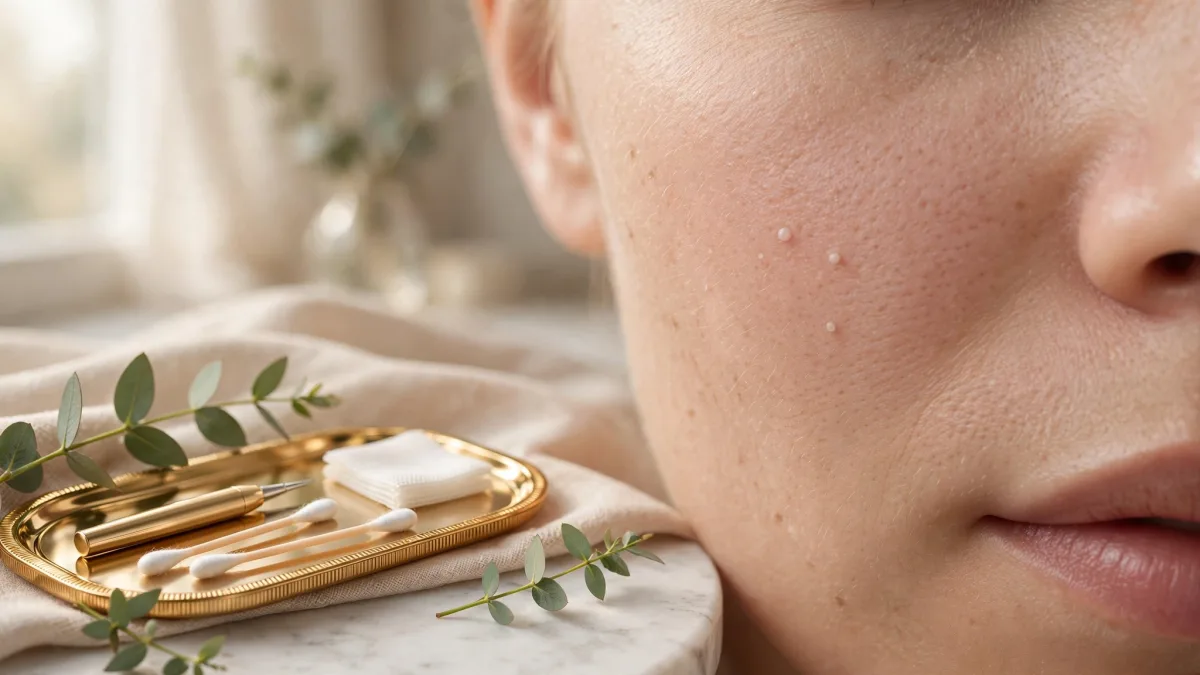
Milia removal usually involves professional extraction when these small, harmless cysts do not clear on their own. Learn what causes milia, which treatments work, why squeezing them can cause problems, and how to reduce new bumps.
The Fitzpatrick skin type scale classifies skin according to how it tends to react to sun exposure, particularly whether it burns or tans. Learn what Types I to VI mean, how the scale is used, and why it has important limitations.
Tinted sunscreen provides broad-spectrum UV protection while adding pigment that can also help protect against visible light. Learn why it may be especially useful for hyperpigmentation, how to choose SPF, and how to use it correctly.
Retinol for beginners is best approached slowly. Learn what retinol does, how to introduce it, how often to use it, what products to combine with it, how to reduce irritation, and when retinol should be avoided.
A salicylic acid cleanser can help remove excess oil, unclog pores and improve acne-prone skin, particularly blackheads and whiteheads. Learn how it works, how often to use it, possible side effects, and how to fit it into a skincare routine.