Does Sweat Actually Detox Your Skin?
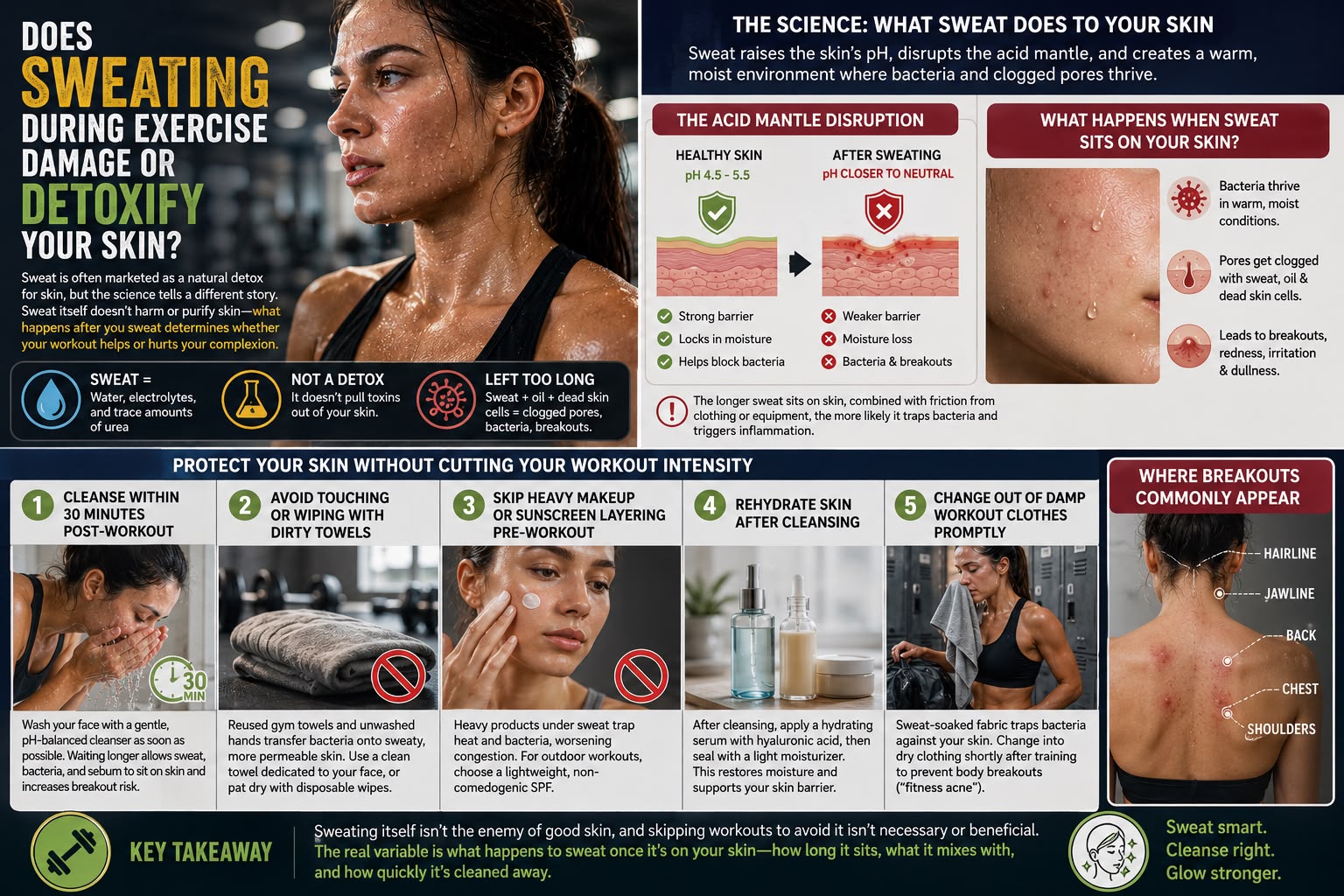
Sweat is often marketed as a natural detox for skin, but the science tells a different story. The real answer is that sweat itself doesn't harm or purify skin—what happens after you sweat determines whether your workout helps or hurts your complexion.
Sweat is composed primarily of water, electrolytes, and trace amounts of urea. It doesn't pull toxins out of the skin the way wellness marketing often suggests. Instead, sweat can temporarily raise the skin's surface pH, disrupt the protective acid mantle, and create a warm, moist environment where bacteria and clogged pores thrive.
If sweat remains on the skin for too long, it mixes with sebum, dirt, and dead skin cells. This combination can contribute to post-workout breakouts rather than cleansing the skin.
The Acid Mantle: Your Skin's Natural Defense
Healthy skin naturally maintains a slightly acidic pH between 4.5 and 5.5. This protective layer, known as the acid mantle, helps defend against harmful bacteria, locks in moisture, and supports a healthy skin barrier.
Because sweat is closer to a neutral pH, leaving it on the skin for extended periods can temporarily reduce this protective acidity. As a result, some people notice tightness, irritation, or acne flare-ups after exercise—especially those with oily, acne-prone, or sensitive skin.
Friction from workout clothing, headbands, helmets, yoga mats, or gym equipment can make matters worse by trapping sweat and bacteria against the skin, increasing inflammation and clogged pores.
5 Smart Ways to Protect Your Skin After Sweating
1. Cleanse Within 30 Minutes
Wash your face as soon as possible after exercising using a gentle, pH-balanced cleanser. Cleansing within about 30 minutes helps remove sweat, excess oil, and bacteria before they clog pores and cause breakouts, particularly around the hairline and jawline.
2. Use Clean Towels and Avoid Touching Your Face
Dirty gym towels and unwashed hands can transfer bacteria directly onto sweaty skin. Always use a fresh towel for your face and avoid rubbing aggressively. Gently pat the skin dry instead.
3. Keep Pre-Workout Products Lightweight
Heavy makeup or thick skincare products can trap heat, oil, and sweat against the skin during exercise. If you're working out outdoors, choose a lightweight, non-comedogenic sunscreen that won't clog pores.
4. Rehydrate Your Skin
Exercise causes water loss through sweating, so replenish hydration after cleansing. Apply a hydrating serum containing hyaluronic acid, followed by a lightweight moisturizer to restore moisture and support the skin barrier.
5. Change Out of Sweaty Clothes Quickly
Damp workout clothing creates an ideal environment for bacteria to multiply. Change into clean, dry clothes soon after exercising, especially if you're prone to body acne on the chest, shoulders, or back.
Bottom Line
Sweating itself is not harmful and doesn't need to be avoided for healthy skin. Regular exercise benefits circulation, stress management, and overall wellness. However, sweat is not a skin detoxifier. The key to maintaining a clear complexion is removing sweat, bacteria, and excess oil promptly after your workout while restoring your skin's natural barrier.
Hyaluflow Tip: Your workout isn't causing breakouts—your post-workout skincare routine may be. Cleanse promptly, hydrate your skin, and avoid letting sweat sit for long periods to keep your complexion healthy and clear.