Reviewed by the HyaluFlow Health Editorial Team | Published: July 4, 2026 | Last Updated: August 27, 2026
Quick Answer
Glass hair is not necessarily damaged hair, but it is not proof of healthy hair either. Shine mainly reflects how smoothly the hair surface interacts with light, while excessive heat, chemical processing, and friction can damage the same cuticle that helps hair look glossy.
Key Takeaways
- Hair shine is strongly influenced by the condition and smoothness of the cuticle.
- Conditioners can temporarily smooth cuticle scales and improve light reflection.
- Frequent high-heat styling can damage the hair surface, especially when combined with chemical processing.
- Gloss treatments may improve appearance without requiring daily flat-ironing.
- Curly and wavy hair can look shiny without being straightened.
What Makes Hair Look Like Glass?
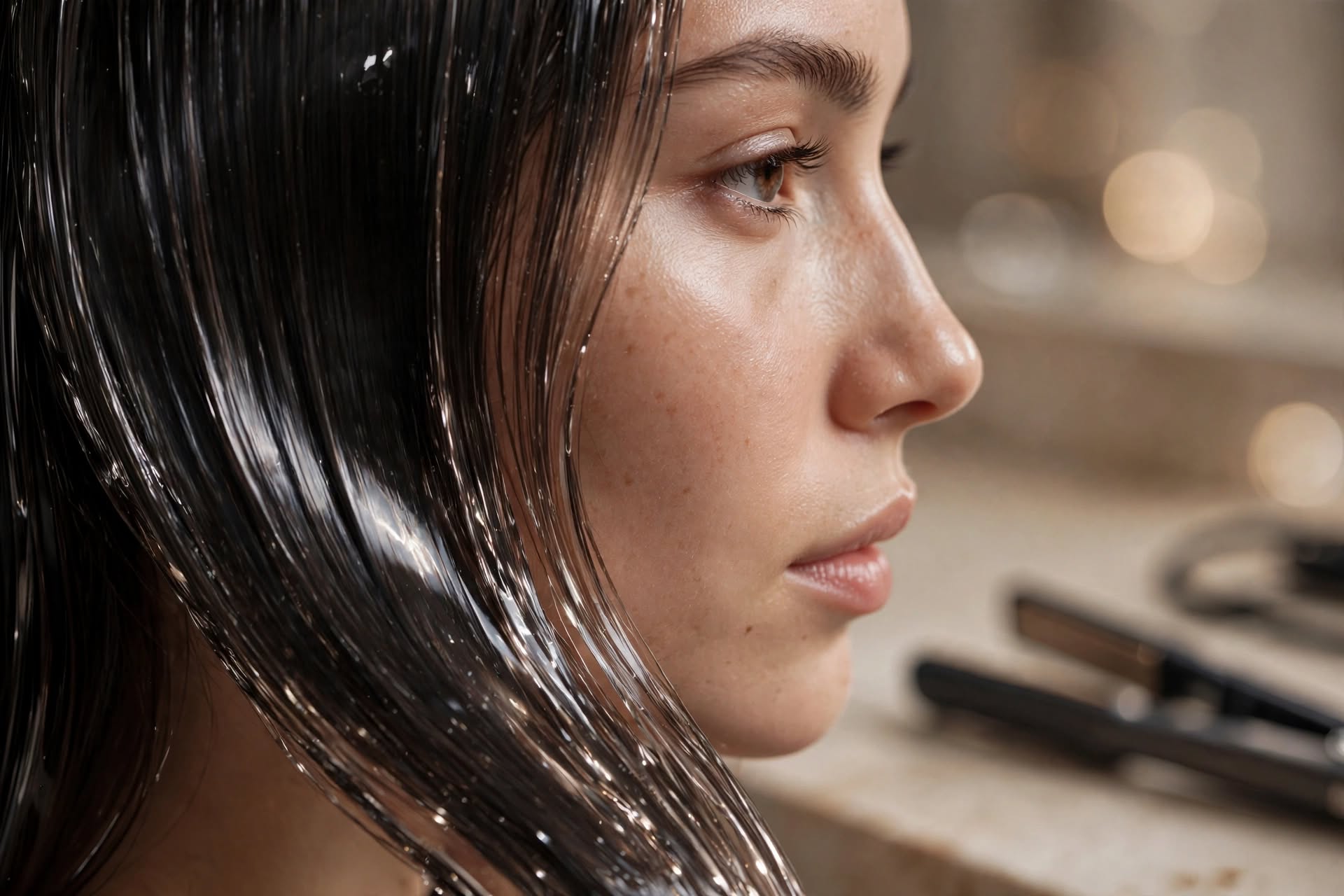
The glass-hair effect comes from unusually smooth, reflective strands. Hair with a relatively even surface can reflect light more consistently, creating the mirror-like appearance associated with the trend.
Research on hair shine has linked changes in the cuticle surface with light-scattering behavior, helping explain why rougher or more weathered hair can appear duller. PubMed research on hair cuticle structure and shine
Is Glass Hair Actually Healthy?
Not necessarily. A glossy finish tells you how the hair looks and behaves optically, not whether the underlying fiber is free from damage.
Conditioning products can flatten cuticle scales, reduce friction, and increase light reflection, which means damaged or chemically treated hair can temporarily look smoother and shinier after cosmetic conditioning. Shampoo and Conditioners: What a Dermatologist Should Know?
Can Heat Styling Cause Hair Damage?
Yes. Repeated heat exposure can affect the hair cuticle and other structural components, particularly when temperatures are high or styling is frequent.
In a controlled study, repeated blow-drying produced greater surface damage at higher temperatures, with the most pronounced cuticle changes occurring under the highest tested heat condition. Hair shaft damage from heat and drying time of hair dryer
That does not mean every blow-dry or flat-iron session will ruin your hair. Frequency, temperature, technique, chemical processing, and the existing condition of the hair all matter.
What About Glosses and Hair Glazes?
Glosses and conditioning treatments can make hair appear smoother and more reflective by depositing ingredients onto the fiber and reducing surface friction. They can therefore create some of the visual qualities people associate with glass hair without relying entirely on aggressive heat styling.
Hair-care research shows that conditioning agents can interact with the hair surface and improve manageability, smoothness, and shine. On Hair Care Physicochemistry: From Structure and Degradation to Novel Biobased Conditioning Agents
However, a cosmetic coating is not the same as permanently repairing damaged hair. Products can improve the appearance and feel of the fiber while the underlying structural damage remains.
What the Science Says
The strongest evidence supports a simple distinction: shine and hair health are related, but they are not interchangeable. A smoother cuticle generally helps hair look shinier, while damaged cuticles can contribute to roughness, friction, and reduced shine.
Chemical straightening can also make hair appear smoother and shinier while leaving some structural problems unresolved. One study found improved smoothness and shine after chemical straightening but no significant improvement in transverse fissures or split ends. Structural changes of hair shaft after application of chemical hair straighteners
Common Myths About Glass Hair
Myth: Super-shiny hair always means healthy hair.
Not true. Conditioners, polymers, silicones, glosses, and styling techniques can temporarily improve shine.
Myth: Curly hair cannot achieve glass-like shine.
False. Hair does not need to be straight to reflect light. Conditioning and reducing surface roughness can improve shine across different textures.
Myth: More heat creates better shine.
Not necessarily. Excessive heat can damage the cuticle and eventually work against the smooth appearance you are trying to create.
Who Should Pay Attention?
People with bleached, chemically straightened, highly porous, brittle, or frequently heat-styled hair should be especially cautious about chasing a glass-hair finish with repeated high-temperature styling.
Research also suggests that chemically treated hair can be more vulnerable to additional structural changes. Alterations promoted by acid straightening and/or bleaching in hair microstructures
Action Steps
- Use conditioning treatments to improve smoothness before increasing heat exposure.
- Keep flat-iron and blow-dryer temperatures as low as practical for the desired result.
- Use a heat-protective styling product when applying significant heat.
- Consider a gloss or conditioning treatment if your goal is shine rather than permanent straightening.
- Reduce repeated chemical processing on already fragile or bleached hair.
- Do not straighten naturally curly or wavy hair solely because you think straight hair is healthier.
Evidence Strength Summary
Strong: Hair-surface condition affects shine, and repeated heat or chemical processing can damage hair fibers.
Moderate: Conditioning products can temporarily improve smoothness, manageability, and shine.
Limited: Claims that a particular salon gloss or “bond repair” treatment permanently restores damaged hair should be treated cautiously unless supported by product-specific clinical evidence.
Bottom Line
Glass hair is primarily an appearance goal, not a medical measure of hair health. A smooth, reflective finish can come from good conditioning and a well-maintained cuticle, but it can also be created temporarily with styling products or heat.
The smarter approach is to chase healthy-looking shine without unnecessary damage. If achieving the trend requires increasingly high heat, aggressive brushing, or repeated chemical processing, the styling routine is defeating the purpose.