Most hair-growth advice focuses on the hair itself — serums, oils, supplements. But a growing body of research points to something underneath it all: the scalp microbiome, a bacterial ecosystem that directly influences how healthy your hair can actually grow.
What the Scalp Microbiome Does
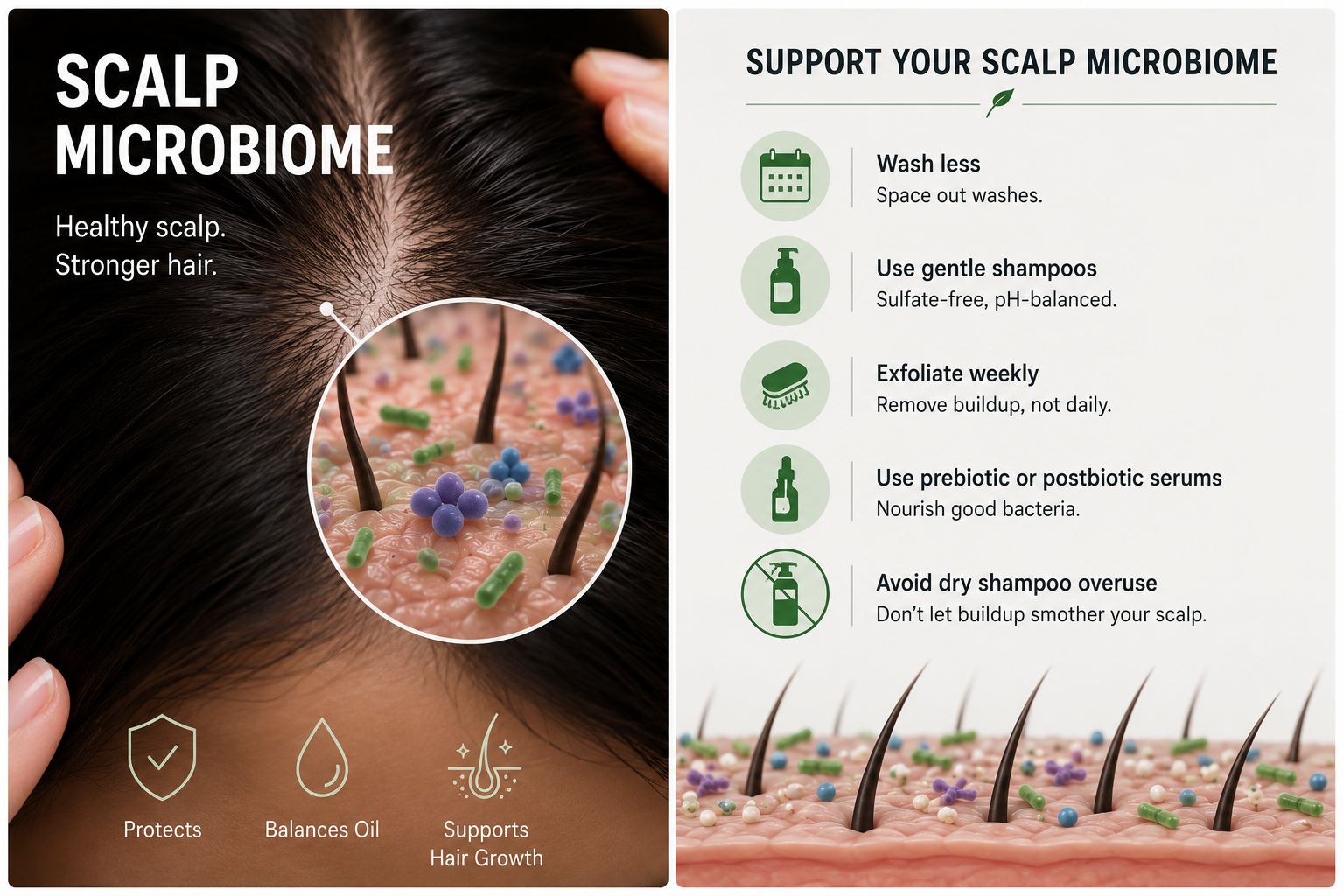
Like your skin, your scalp hosts trillions of bacteria and fungi that form a protective ecosystem. This microbiome regulates oil production, defends against harmful microorganisms, and helps maintain the scalp's barrier function. When it's balanced, hair follicles operate in a stable environment. When it's disrupted — a state called dysbiosis — the scalp becomes more prone to excess oil, flaking, itchiness, and inflammation that can interfere with healthy hair growth.
How Modern Hair Routines Disrupt It
Sulfate-heavy shampoos, daily washing, and harsh clarifying treatments can strip the scalp's protective bacteria along with buildup and oil. This is part of why over-washed scalps often produce even more oil afterward — the disrupted microbiome overcorrects, triggering the scalp's sebaceous glands to compensate for what was just stripped away.
The Dandruff Connection
Common dandruff is frequently linked to an overgrowth of Malassezia, a yeast naturally present on the scalp. In a balanced microbiome, other bacteria keep Malassezia in check. When the ecosystem is disrupted, Malassezia can overgrow, triggering the flaking and irritation associated with dandruff — meaning many dandruff treatments work by rebalancing the microbiome, not just eliminating a single organism.
5 Ways to Support Your Scalp Microbiome
- Reduce washing frequency gradually. Over-washing disrupts bacterial balance; spacing out washes allows the scalp's natural ecosystem to stabilize rather than constantly resetting.
- Choose sulfate-free, pH-balanced shampoos. Harsh sulfates are more likely to strip beneficial bacteria than gentler cleansing agents.
- Introduce scalp-specific exfoliation sparingly. A weekly gentle scalp scrub can remove buildup without daily over-cleansing, giving the microbiome room to recover between treatments.
- Look for prebiotic or postbiotic scalp serums. These support existing beneficial bacteria rather than introducing unstable live cultures.
- Avoid excessive dry shampoo buildup. While skipping wash days can help the microbiome, layering dry shampoo without ever fully cleansing can smother the scalp and disrupt bacterial balance in the opposite direction.
Bottom Line
Hair growth doesn't start with the strands — it starts with the environment they grow out of. Supporting your scalp microbiome means finding the middle ground between over-washing and under-cleansing, not adding more products to an already disrupted ecosystem.