Reviewed by the HyaluFlow Health Editorial Team | Published: July 11, 2026 | Last Updated: August 26, 2026
Beef tallow has become a viral skincare ingredient, with claims that it can repair the skin barrier, clear acne, smooth wrinkles, and replace conventional moisturizers. But social-media popularity is not the same as clinical evidence.
Quick Answer
Beef tallow can act as a rich, occlusive moisturizer and may help reduce dryness by slowing water loss from the skin. However, there is not enough high-quality research to show that it is better than established moisturizers or that it treats acne, eczema, wrinkles, or other skin conditions.
A 2024 scoping review found major research gaps around topical tallow, while a 2025 analysis found that many skincare claims made online lacked strong scientific support. Tallow, Rendered Animal Fat, and Its Biocompatibility With Skin: A Scoping Review and Beef Tallow-Based Skincare Claims in Social Media: A Cross-Sectional Analysis
Key Takeaways
- Beef tallow mainly acts as an occlusive moisturizer.
- It contains fatty acids also found in skin lipids.
- Clinical research specifically testing tallow on human skin is limited.
- It may suit dry skin but may be unsuitable for some oily or acne-prone skin.
- Modern moisturizers containing ceramides and humectants have stronger evidence.
What Is Beef Tallow?
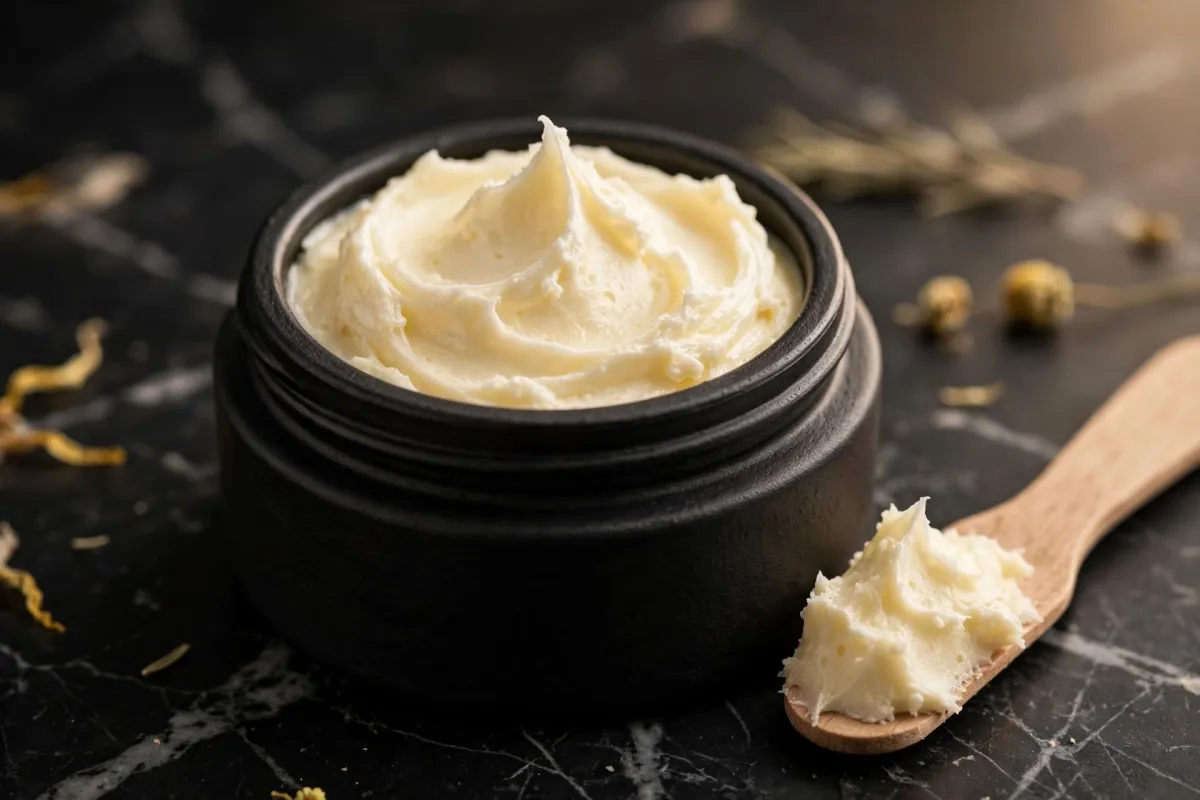
Beef tallow is purified fat produced by rendering fatty tissue from cattle. It contains triglycerides with fatty acids such as oleic, palmitic, and stearic acid.
The 2024 scoping review identified 19 relevant studies but emphasized the lack of controlled human research specifically evaluating tallow as a skincare ingredient. Tallow, Rendered Animal Fat, and Its Biocompatibility With Skin
How Does Tallow Work?
Tallow primarily functions as an occlusive. Occlusives form a protective layer that slows transepidermal water loss, helping dry skin feel softer and less tight.
This effect is not unique to tallow. Dermatologists commonly recommend moisturizers containing occlusive ingredients for dry skin. American Academy of Dermatology: How to Pick the Right Moisturizer for Your Skin
Potential Benefits
May Improve Dryness
The most plausible benefit is moisturization. Tallow may reduce moisture loss and soften rough, dry skin, but research has not established that it works better than other occlusive moisturizers.
May Support the Skin Barrier
Tallow contains fatty acids also found in skin lipids, which may explain some of its moisturizing properties. However, chemical similarity does not prove superior barrier repair.
For dry skin, the American Academy of Dermatology recommends moisturizers with ingredients such as ceramides, glycerol, and urea when appropriate. American Academy of Dermatology: Dry Skin Diagnosis and Treatment
Beef Tallow vs. Modern Moisturizers
| Feature | Beef Tallow | Modern Moisturizers |
|---|---|---|
| Moisturizes dry skin | Likely | Strong evidence |
| Reduces water loss | Likely | Strong evidence |
| Contains ceramides | No | Often |
| Contains humectants | No | Often |
| Human clinical research | Limited | Extensive |
Modern moisturizers can combine occlusives, humectants, and barrier-supporting ingredients, giving them a stronger evidence base than tallow alone. American Academy of Dermatology: How to Pick the Right Moisturizer
Can Beef Tallow Treat Acne?
There is currently no good clinical evidence that beef tallow treats acne. Acne involves excess sebum, clogged follicles, inflammation, and other processes that tallow does not specifically target.
Rich products may also be unsuitable for some acne-prone people. The American Academy of Dermatology recommends oil-free or non-comedogenic moisturizers when breakouts are a concern. American Academy of Dermatology: Moisturizer and Acne
Can It Reduce Wrinkles?
Moisturizing can temporarily make fine lines look less noticeable because hydrated skin appears smoother. That does not mean tallow reverses skin aging.
There is no convincing clinical evidence that beef tallow stimulates collagen production or reverses photoaging. For wrinkle prevention, dermatologists emphasize sunscreen and evidence-based anti-aging treatments. American Academy of Dermatology: Skin Care Basics
Potential Risks
Tallow can feel greasy and may not suit oily or acne-prone skin. Products containing fragrances or essential oils may also irritate sensitive skin.
Cleveland Clinic notes that research on topical beef tallow remains limited and that its vitamin content does not establish meaningful skincare benefits. Cleveland Clinic: Beef Tallow for Skin: Is It Useful?
What the Science Says
The evidence supports treating beef tallow as a possible moisturizing ingredient, not a proven treatment for acne, eczema, psoriasis, or wrinkles.
The 2025 Journal of Cosmetic Dermatology analysis found that many online claims about treating skin diseases lacked adequate scientific support and noted financial bias in promotional content. Beef Tallow-Based Skincare Claims in Social Media: A Cross-Sectional Analysis
Common Myths
- Myth: Tallow is identical to human skin oil.
Fact: It shares some fatty acids with skin lipids but is not identical to human sebum. - Myth: Tallow cures acne.
Fact: There is insufficient clinical evidence for this claim. - Myth: Natural means safer.
Fact: Natural ingredients can still irritate skin or clog pores. - Myth: Tallow replaces sunscreen.
Fact: It does not provide meaningful UV protection.
Who Should Pay Attention?
Tallow may be reasonable as a moisturizer for people with very dry skin who tolerate rich products. Those with oily, acne-prone, or sensitive skin may prefer lighter, non-comedogenic formulations.
Evidence Strength Summary
- Moisturizing effect: Moderate, but direct human evidence is limited.
- Skin-barrier support: Plausible, but not proven superior.
- Acne treatment: Insufficient evidence.
- Wrinkle reduction: Insufficient evidence beyond moisturizing.
- Superior to modern moisturizers: Not established.
Bottom Line
Beef tallow can moisturize dry skin, but the evidence does not support the bigger claims surrounding the trend. It has not been shown to outperform well-formulated moisturizers or treat acne, wrinkles, eczema, or other skin diseases.
If you use it, treat tallow as a moisturizer rather than a miracle ingredient. Patch-test first and keep proven basics such as gentle cleansing, appropriate moisturization, and daily broad-spectrum sunscreen in your routine.