Reviewed by the HyaluFlow Health Editorial Team | Published: October 18, 2026 | Last Updated: October 18, 2026
Quick Answer: Jojoba oil for skin may help soften dry skin and reduce moisture loss. It is a plant-derived liquid wax commonly used in moisturizers and other skin care products. Unlike conventional plant oils, jojoba oil consists primarily of wax esters. A review published in Phytomedicine on jojoba oil in dermatology discusses its composition and potential cosmetic applications.
Jojoba oil may suit some people with dry skin, but evidence supporting its use as a treatment for acne, eczema, or wrinkles remains limited. Choose a product intended for skin care and test it on a small area before regular use.
Key Takeaways
- Jojoba oil is primarily a liquid wax used in skin care formulations.
- It may help soften skin and improve the feel of dryness.
- It is not an established standalone treatment for acne or skin aging.
- People with oily or acne-prone skin should introduce it cautiously.
- Skin reactions are possible, even though many people tolerate topical jojoba oil.
What Is Jojoba Oil?
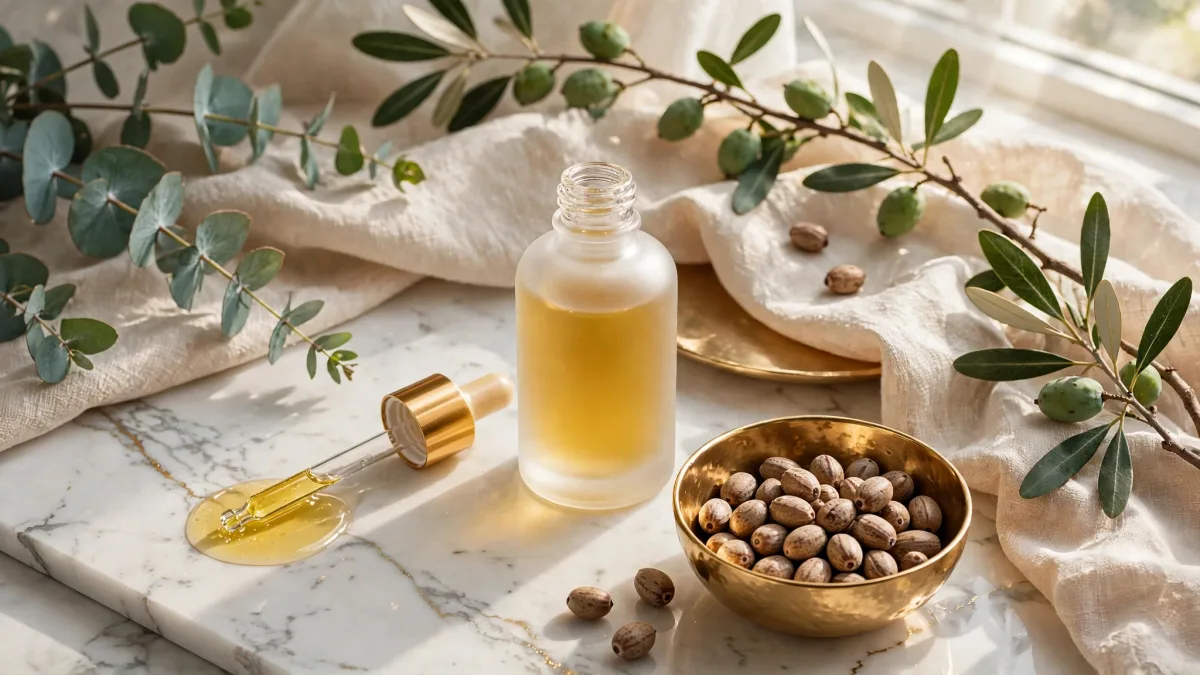
Jojoba oil comes from the seeds of the jojoba plant, native to arid regions of North America. Technically, it is a liquid wax made largely of wax esters rather than a conventional triglyceride oil.
It is used in skin care products because it spreads easily and helps condition the skin. You can find it in facial oils, moisturizers, cleansers, and body care products. The scientific review of jojoba in dermatology describes its use in cosmetics, including moisturizers and sunscreen formulations.
Benefits of Jojoba Oil for Skin
1. Helps soften dry skin
Jojoba oil can act as an emollient, helping rough or flaky skin feel smoother. Applying an appropriate moisturizer can help reduce dryness and support the skin's protective barrier. The American Academy of Dermatology's dry-skin guidance explains why regular moisturizing matters.
2. Supports the skin barrier
Keeping skin moisturized helps maintain its protective barrier. Jojoba oil may complement a skin care routine, although it should not replace prescribed treatment for persistent skin conditions. Evidence about moisturizers generally should not be interpreted as proof that jojoba oil alone treats skin disease.
3. Provides a moisturizing option
Some people prefer jojoba oil because it spreads easily without the heavy feel of thicker oils. However, its texture and suitability depend on the formulation and individual skin type.
Is Jojoba Oil Good for Acne-Prone Skin?
Jojoba oil is sometimes marketed for acne-prone skin, but strong clinical evidence that it clears acne is lacking. It should not replace established acne treatments when these are appropriate. The American Academy of Dermatology's acne treatment guidance discusses evidence-supported options, including salicylic acid, benzoyl peroxide, and topical retinoids.
If you have oily or acne-prone skin, introduce jojoba oil cautiously and monitor your skin for new or worsening breakouts. When choosing a moisturizer, the AAD recommends looking for labels such as "non-comedogenic" or "won't clog pores" to reduce the likelihood of breakouts.
How to Use Jojoba Oil on Your Face
- Cleanse your face with a gentle cleanser.
- Apply your usual moisturizer if needed.
- Use a few drops of jojoba oil and spread a thin layer over the skin.
- Start gradually and adjust according to your skin's response.
Avoid applying it to irritated or broken skin. Introduce products one at a time so you can identify the cause if irritation develops. For sensitive skin, the AAD's sensitive-skin recommendations offer additional guidance on choosing and testing skin care products.
Side Effects and Precautions
Jojoba oil is generally used as a topical cosmetic ingredient, but irritation or allergic contact dermatitis is possible. Published case reports have documented contact dermatitis associated with jojoba.
Stop using the product if you develop persistent redness, itching, swelling, or a rash. Testing a small area first may help identify a reaction, but it cannot guarantee that a reaction will not occur later. Seek medical advice if symptoms persist or worsen.
Does Jojoba Oil Reduce Wrinkles?
Jojoba oil may temporarily make dry skin look smoother by improving its feel and moisture balance. However, there is insufficient clinical evidence that jojoba oil removes wrinkles or reverses skin aging.
For everyday skin protection, use a suitable moisturizer and broad-spectrum sunscreen with SPF 30 or higher. The AAD's sunscreen recommendations explain how to choose appropriate sun protection.
The Bottom Line
Jojoba oil for skin can be a useful moisturizing option, particularly for people experiencing dryness. However, claims that it cures acne, eliminates wrinkles, or treats skin disease are not well established by strong clinical evidence.
Choose a suitable product, introduce it gradually, and stop if irritation occurs. For persistent acne, eczema, or other skin concerns, seek advice from a qualified health professional.