Reviewed by the HyaluFlow Health Editorial Team | Published: June 30, 2026 | Last Updated: August 28, 2026
Quick Answer: Skin aging becomes more noticeable over time, but the pace varies. Collagen and elasticity gradually decline, while cumulative UV exposure and hormonal changes can contribute to wrinkles, dryness, pigmentation, and reduced firmness.
Key Takeaways
- Skin aging is gradual and highly individual.
- Collagen and elasticity decline with age.
- UV exposure is a major cause of premature skin aging.
- Dryness and sensitivity may increase over time.
- Menopause can accelerate some skin changes.
- Daily sunscreen is a core anti-aging habit.
- Retinoids have strong evidence for photoaged skin.
- Your routine should adapt to your skin's needs.
How Skin Aging Changes by Decade
Skin aging is not a switch that suddenly turns on at a particular birthday. It reflects intrinsic aging combined with genetics, cumulative UV exposure, lifestyle, and environmental factors.
UV radiation is especially important because repeated exposure contributes to collagen breakdown, wrinkles, uneven pigmentation, and loss of elasticity.
A randomized trial found that people assigned to daily sunscreen use experienced less skin aging than those using sunscreen at their discretion. The findings were published in Annals of Internal Medicine.
The 30s: Early Changes Begin
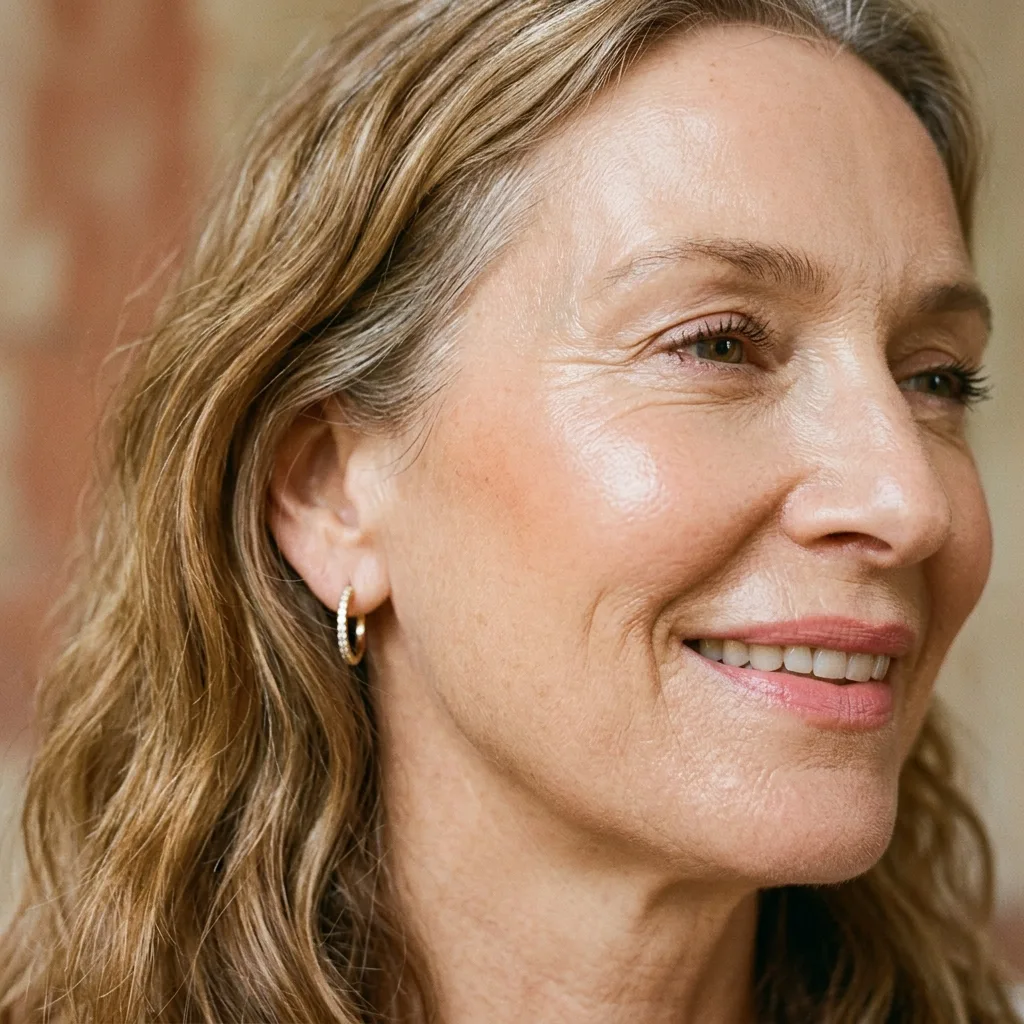
During your 30s, fine lines may become easier to notice, particularly around the eyes and forehead. Skin may also appear less radiant or recover more slowly from environmental stress.
Collagen gradually declines with age, making prevention particularly valuable. Daily broad-spectrum SPF 30 or higher, moisturizer, gentle cleansing, and a suitable retinoid can form a strong foundation.
Topical tretinoin has clinical evidence for improving signs of photoaging, including wrinkles and skin texture, as reported in Journal of the American Academy of Dermatology.
The 40s: Firmness and Hydration Decline
In your 40s, fine lines and wrinkles may become deeper, while reduced firmness and uneven pigmentation can become more apparent.
Cumulative sun exposure matters because photoaging adds to natural age-related changes. Dryness or sensitivity may also become more noticeable.
Continue daily sunscreen and use proven actives as tolerated. If your skin feels dry or dehydrated, the following tool can help you assess your daily hydration needs.
The 50s: Hormonal Changes Become Important
For many women, the 50s overlap with menopause. Declining estrogen can affect skin thickness, collagen, elasticity, hydration, and barrier function.
A review in Nutrients discusses the relationship between declining estrogen and changes in skin and dermal health.
Skin may feel drier or more fragile during this stage. Gentle cleansing, regular moisturization, and barrier-supporting ingredients can therefore become increasingly important.
Skin Aging in Your 30s vs 40s vs 50s
| Age | Common Changes | Priority |
|---|---|---|
| 30s | Fine lines, early collagen decline, dullness | Prevention and sun protection |
| 40s | Wrinkles, pigmentation, reduced firmness | Sun protection and barrier care |
| 50s | Dryness, thinning, reduced elasticity | Moisturization and targeted care |
How to Adapt Your Skincare Routine
Your routine does not need to become complicated with age. Keep the basics consistent and adjust products when your skin becomes drier, more sensitive, or more prone to pigmentation.
In Your 30s
Prioritize gentle cleansing, moisturizer, and daily broad-spectrum SPF 30 or higher. A retinoid or antioxidant can be considered if appropriate for your skin.
In Your 40s
Continue sunscreen and tolerated active ingredients. Add more barrier support if dryness develops, using moisturizers containing ingredients such as ceramides or humectants.
In Your 50s
Gentle cleansing and richer moisturization may become more useful. Reduce irritating actives if your skin becomes dry or sensitive rather than adding more products.
What the Science Says
Sun protection has some of the strongest evidence for preventing premature skin aging. The American Academy of Dermatology recommends sun protection as part of healthy skin care.
Topical retinoids also have substantial evidence for improving photoaged skin. However, evidence varies widely among newer anti-aging ingredients and individual formulations.
The practical takeaway is simple: protect against UV exposure, maintain the skin barrier, moisturize consistently, and choose proven actives based on your skin's tolerance.
Common Myths About Skin Aging
Myth: Skin aging starts at 40.
Fact: Aging is continuous, although visible changes become more noticeable at different times for different people.
Myth: Wrinkles are caused only by age.
Fact: UV exposure, genetics, smoking, and other environmental factors also influence visible aging.
Myth: You need a new routine every decade.
Fact: The foundation can remain consistent. Your products may simply need to change as your skin's needs change.
Who Should Pay Attention?
Anyone concerned about premature skin aging can benefit from consistent sun protection and barrier care. This is particularly important for people with substantial sun exposure, increasing dryness, pigmentation, or skin changes around menopause.
Rapidly changing spots, persistent rashes, non-healing sores, or unusual skin changes should be evaluated by a dermatologist rather than dismissed as normal aging.
Evidence Strength Summary
| Claim | Evidence |
|---|---|
| Daily sunscreen helps reduce photoaging | Strong |
| Topical tretinoin improves photoaging | Strong |
| Menopause affects skin properties | Moderate to strong |
| Moisturizers improve skin hydration | Strong |
| All anti-aging ingredients work equally | Not supported |
Bottom Line
Skin aging in your 30s, 40s, and 50s reflects natural aging, cumulative UV exposure, genetics, lifestyle, and hormonal changes.
The most reliable strategy is not an increasingly complicated routine. Daily sunscreen, gentle skincare, moisturization, and evidence-based active ingredients can help protect skin and improve visible signs of aging over time.