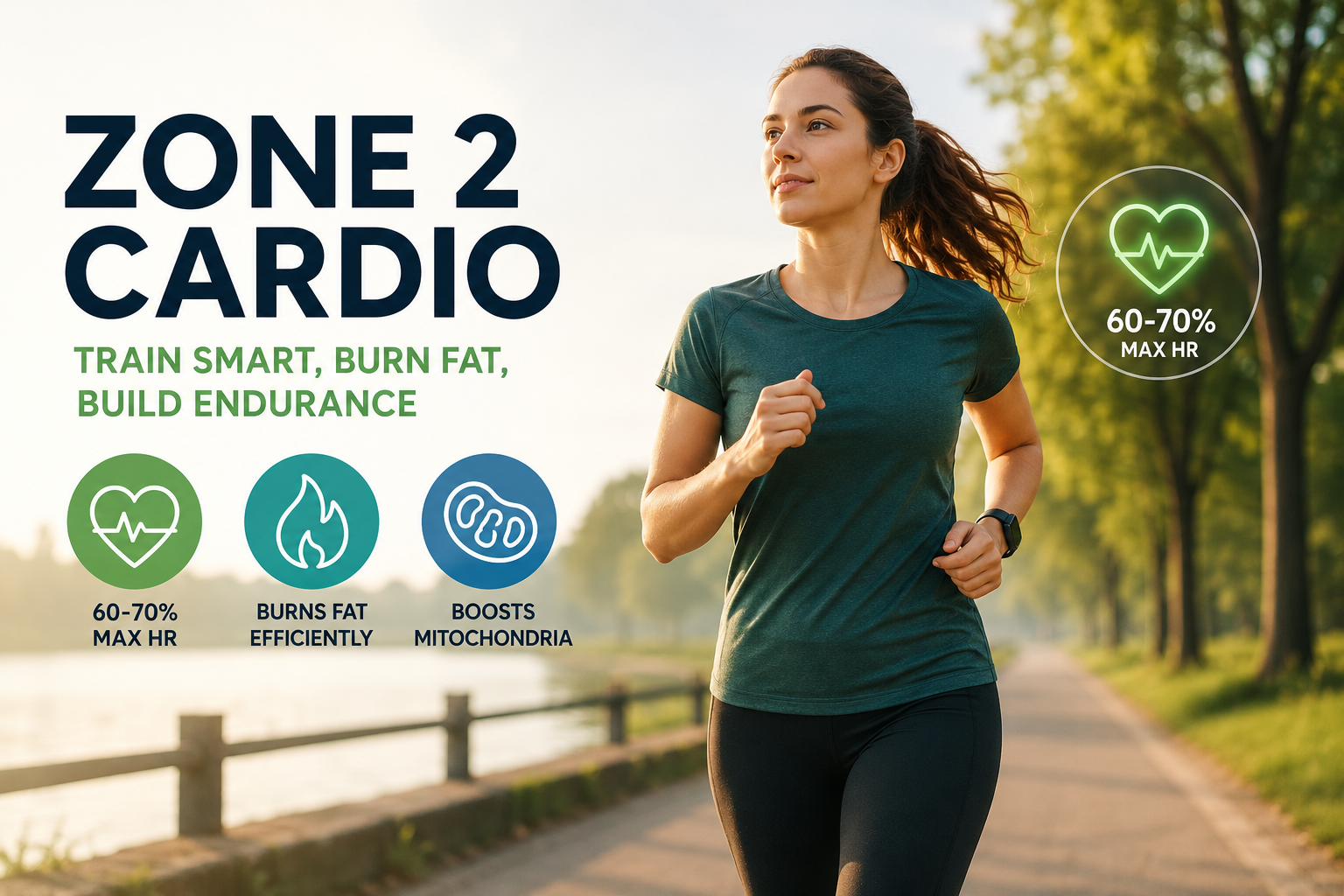
Quick Answer: Zone 2 cardio is moderate-intensity exercise performed at about 60–70% of your maximum heart rate. At this intensity, your body primarily uses fat for fuel while improving mitochondrial function, aerobic fitness, endurance, and metabolic health.
Key Takeaways
- Zone 2 cardio trains your body to use oxygen and fat more efficiently.
- It improves mitochondrial function, endurance, and cardiovascular fitness.
- You should be able to talk comfortably but not sing while exercising.
- Most people benefit from 2–4 sessions per week lasting 30–60 minutes.
- Zone 2 complements strength training—it should not replace it.
High-intensity interval training (HIIT) often gets the spotlight, but many exercise scientists and endurance coaches spend far more time training at a much easier pace. That approach is called Zone 2 cardio, and it has become one of the fastest-growing fitness trends because of its unique ability to improve endurance, fat metabolism, and long-term health.
Although it may not leave you exhausted, Zone 2 triggers important adaptations inside your muscles that help your body produce energy more efficiently. These benefits extend beyond athletic performance and may support healthier aging, improved insulin sensitivity, and better cardiovascular fitness.
What Is Zone 2 Cardio?
Zone 2 cardio is a moderate-intensity exercise zone where your heart rate stays at approximately 60–70% of your estimated maximum heart rate. At this intensity, your breathing becomes deeper, but you can still hold a conversation without gasping for air.
Activities that commonly fall into Zone 2 include brisk walking, cycling, jogging, swimming, rowing, hiking, and using an elliptical trainer. The goal is not speed—it is maintaining a steady effort that challenges your aerobic system without pushing into high intensity.
Why Does Zone 2 Work?
The biggest reason Zone 2 has gained attention is its effect on mitochondria—the tiny structures inside your cells responsible for producing energy.
During moderate-intensity exercise, your body relies primarily on oxygen to convert stored fat into usable energy through aerobic metabolism. As you repeatedly train in this zone, your muscles gradually develop:
- Greater mitochondrial density
- Improved mitochondrial efficiency
- Better oxygen utilization
- Enhanced fat-burning capacity
- Greater endurance with less fatigue
When exercise intensity becomes too high, your body shifts toward burning carbohydrates more rapidly through anaerobic pathways. While high-intensity exercise has important benefits, it does not stimulate the same aerobic adaptations as prolonged Zone 2 training.
Potential Health Benefits of Zone 2 Cardio
Growing research suggests that consistent Zone 2 training may provide benefits beyond improving athletic performance.
- Improves cardiovascular fitness
- Increases aerobic endurance
- Enhances fat metabolism
- Supports healthy insulin sensitivity
- May improve blood sugar regulation
- Helps reduce exercise fatigue over time
- Supports healthy aging through improved mitochondrial function
- May make higher-intensity workouts feel easier
Because of these benefits, many sports medicine experts and longevity researchers recommend making moderate-intensity aerobic exercise a regular part of a balanced fitness routine.
How to Calculate Your Zone 2 Heart Rate
A simple estimate is to subtract your age from 220 to estimate your maximum heart rate.
Estimated Maximum Heart Rate = 220 − Age
Your Zone 2 heart rate is generally around 60–70% of that value.
For example:
- Age: 35 years
- Estimated Max Heart Rate: 185 bpm
- Zone 2 Range: Approximately 111–130 bpm
This formula provides only an estimate because individual heart rates vary. Fitness trackers, chest-strap heart rate monitors, laboratory testing, or guidance from an exercise professional can provide more personalized measurements.
The Talk Test: An Easy Way to Know You're in Zone 2
If you do not wear a heart rate monitor, the "talk test" works surprisingly well.
During Zone 2 exercise:
- You can speak in complete sentences.
- Your breathing is noticeably heavier than at rest.
- You cannot comfortably sing.
- You feel like you could maintain the pace for a long period.
If speaking becomes difficult, you've likely moved into a higher training zone.
How Much Zone 2 Cardio Should You Do?
For most healthy adults, experts generally recommend:
- Beginners: 2–3 sessions per week
- Intermediate exercisers: 3–4 sessions weekly
- Duration: 30–60 minutes per session
You can build your aerobic fitness using brisk walking, cycling, swimming, jogging, rowing, or other continuous activities that keep your heart rate within the target range.
Zone 2 vs HIIT: Which Is Better?
| Zone 2 Cardio | HIIT |
|---|---|
| Moderate intensity | Very high intensity |
| Mainly burns fat during exercise | Primarily relies on carbohydrates |
| Builds aerobic endurance | Improves speed and power |
| Lower recovery demands | Requires longer recovery |
| Sustainable for longer sessions | Usually lasts 10–30 minutes |
Neither method is superior in every situation. Most people benefit from combining Zone 2 cardio with strength training and occasional higher-intensity workouts.
Common Mistakes to Avoid
- Going too fast and unintentionally leaving Zone 2.
- Skipping warm-ups and cool-downs.
- Replacing all strength training with cardio.
- Expecting dramatic calorie burn after a single workout.
- Being inconsistent with training.
What the Science Says
Research consistently shows that moderate-intensity aerobic exercise improves cardiorespiratory fitness, mitochondrial adaptations, insulin sensitivity, and overall cardiovascular health. Exercise guidelines from major health organizations continue to recommend regular moderate-intensity aerobic activity as a foundation for long-term health and disease prevention.
Who Should Pay Attention?
- People beginning a fitness journey
- Adults looking to improve heart health
- Individuals aiming to increase endurance
- Those managing weight alongside a healthy diet
- Athletes building an aerobic base
- Older adults seeking sustainable cardiovascular exercise
Bottom Line
Zone 2 cardio may feel easier than intense workouts, but it delivers powerful long-term benefits. By improving your body's ability to use oxygen, burn fat, and strengthen mitochondria, it supports endurance, cardiovascular fitness, metabolic health, and healthy aging. For most people, combining regular Zone 2 sessions with strength training creates a balanced and sustainable fitness routine.