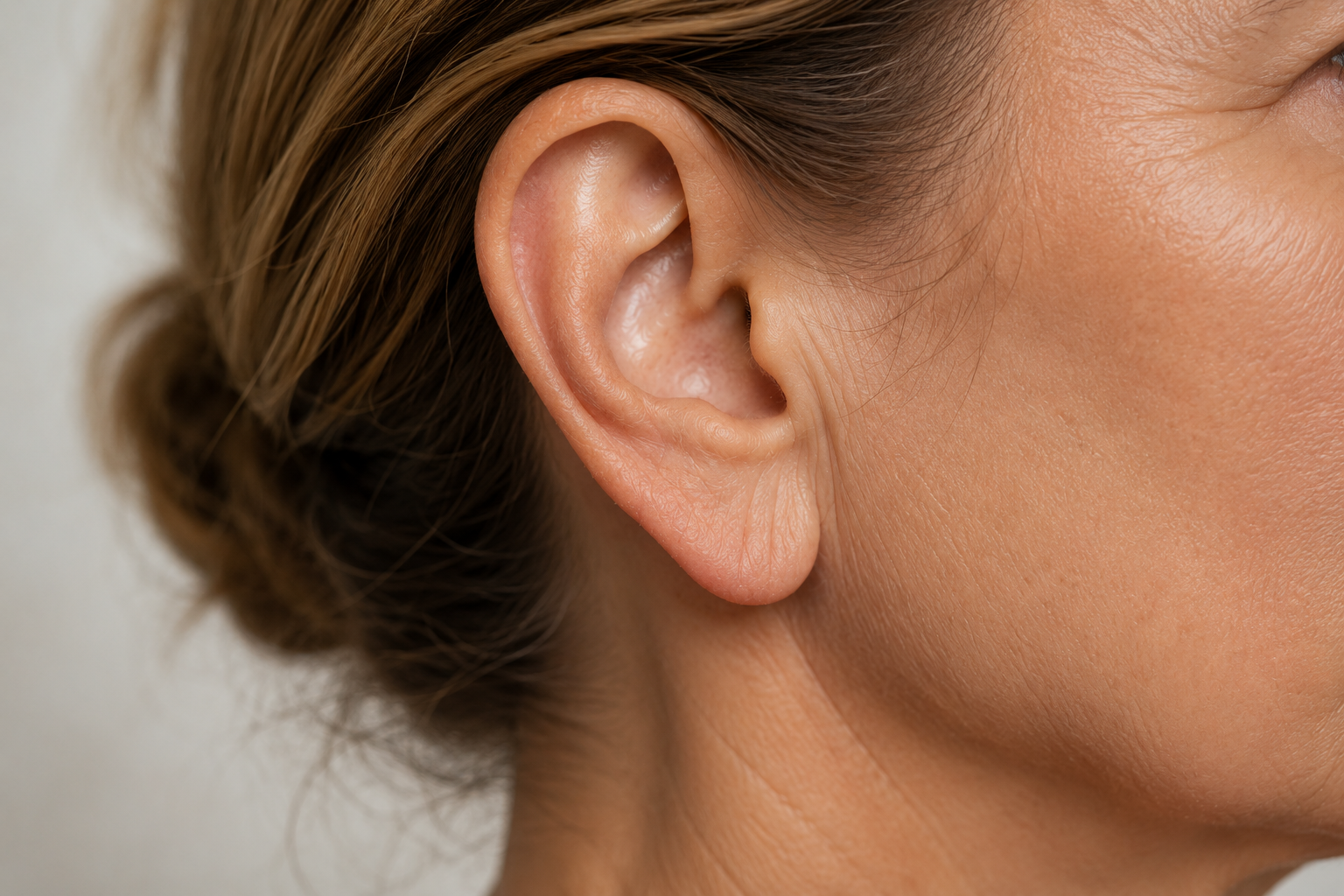
When people think about wrinkles, they usually focus on the forehead, around the eyes, or the neck. Yet one of the earliest—and most overlooked—areas to show visible aging is the earlobe. Fine lines, sagging, stretched piercing holes, and loss of fullness can make the ears appear older even when the rest of the face is well cared for.
Unlike the upper part of the ear, which is supported by flexible cartilage, the earlobe is made entirely of soft tissue. It depends on collagen, elastin, small fat pads, and healthy skin to maintain its shape. As these structural components naturally decline with age, the earlobe becomes thinner, less elastic, and more likely to wrinkle or sag. Daily ultraviolet (UV) exposure, heavy earrings, smoking, and repeated mechanical stress can accelerate these changes.[1–4]
The good news is that while aging cannot be stopped, many of the factors that contribute to premature earlobe wrinkles are preventable. Consistent sun protection, healthy skincare, smart jewelry choices, and early intervention can help preserve smoother, firmer-looking earlobes for longer.
Quick Answer
Earlobes wrinkle because aging gradually reduces collagen, elastin, and supportive fat beneath the skin. Since earlobes contain no cartilage or muscle for structural support, they are especially vulnerable to sagging, stretching, and permanent creases. Protecting the ears from UV damage, avoiding heavy earrings, maintaining skin hydration, and using evidence-based skincare ingredients may help slow visible aging.[2–6]
Key Takeaways
- Earlobes naturally lose collagen, elastin, and fat with age.
- Daily sun exposure is one of the biggest causes of premature earlobe aging.
- Heavy earrings and repeated stretching can accelerate sagging.
- Moisturizers, retinoids, sunscreen, and healthy lifestyle habits support healthier skin.
- Prevention is more effective than trying to reverse advanced tissue laxity.
Quick Facts
| Primary Cause | Age-related collagen and elastin loss |
| Biggest Preventable Risk | Chronic UV exposure |
| Mechanical Risk | Heavy earrings and prolonged stretching |
| Can It Be Prevented? | Partially, with consistent skincare and healthy habits |
| Evidence Strength | Moderate to Strong |
Did You Know?
Dermatologists and plastic surgeons often evaluate the ears during facial aging assessments because the earlobes can reveal collagen loss, long-term sun damage, and tissue stretching that may not yet be obvious elsewhere on the face.[2,4]
Why Do Earlobes Age Differently From the Rest of the Ear?
The outer ear is not made from a single type of tissue. Most of it is supported by flexible cartilage, which helps maintain its shape throughout life. The earlobe, however, contains no cartilage, no bone, and virtually no muscle. Instead, it is composed of skin, connective tissue, blood vessels, nerves, and small pockets of subcutaneous fat.
This unique anatomy gives the earlobe its soft, flexible feel, but it also makes it especially dependent on collagen and elastin for structural support. As these proteins decline naturally with age, the skin loses elasticity, the fat pads become thinner, and the earlobe begins to flatten, wrinkle, and elongate.[3,5]
Healthy vs. Aging Earlobes
| Healthy Earlobe | Aging Earlobe |
|---|---|
| Smooth skin surface | Fine lines and wrinkles |
| Firm connective tissue | Reduced collagen and elastin |
| Rounded, plump appearance | Flattened or elongated appearance |
| Small piercing opening | Enlarged or stretched piercing hole |
| Good skin elasticity | Reduced elasticity and sagging |
What Causes Earlobe Wrinkles?
Most people develop earlobe wrinkles because several aging processes occur at the same time. Natural collagen loss, environmental damage, and repeated mechanical stress gradually weaken the connective tissue that keeps the earlobes smooth and firm.
1. Natural Collagen and Elastin Loss
After our mid-20s, collagen production gradually declines while existing collagen fibers become thinner and less organized. Elastin fibers, responsible for helping skin stretch and rebound, also deteriorate over time.
Because the earlobe lacks cartilage for support, this gradual loss of structural proteins often becomes visible earlier than expected, resulting in thinner skin, reduced firmness, and fine wrinkles.[3,5]
2. Sun Damage Speeds Up Skin Aging
Many people carefully apply sunscreen to their face but forget their ears. This leaves the earlobes exposed to ultraviolet (UV) radiation almost every day.
UV rays stimulate enzymes called matrix metalloproteinases (MMPs), which break down collagen and elastin within the skin. Over many years, this contributes to wrinkles, thinning skin, uneven pigmentation, and loss of elasticity. Applying a broad-spectrum SPF 30 or higher to the entire ear every morning is one of the simplest ways to reduce preventable skin aging.[6–8]
Skin Tip
If your ears are exposed to sunlight, they should receive the same sunscreen protection as your face and neck. The ears are also among the most common locations for certain types of skin cancer.
3. Heavy Earrings and Long-Term Stretching
Heavy earrings may look stylish, but years of wearing them can place continuous downward tension on the delicate connective tissue of the earlobe. Unlike other parts of the body that are reinforced by muscle or cartilage, the earlobe relies almost entirely on collagen and elastin to maintain its shape. Repeated mechanical stress can gradually stretch these fibers, causing the piercing hole to enlarge and the earlobe to become thinner and longer over time.[2,9]
The risk increases with large hoop earrings, dangling statement jewelry, and gauges worn for prolonged periods. Once connective tissue becomes significantly stretched, it has only a limited ability to return to its original shape without medical treatment.
4. Side Sleeping and Mechanical Skin Compression
Your sleeping position can also influence how your skin ages. People who sleep on the same side every night place continuous pressure on one ear for several hours. Over time, this repeated compression may contribute to temporary skin folds that become more noticeable as collagen and elastin decline with age.[10]
Although sleep-related earlobe wrinkles are usually less significant than facial sleep wrinkles, minimizing friction may still help preserve skin quality. If you regularly sleep on your side, a smooth silk or satin pillowcase may reduce friction compared with traditional cotton pillowcases.
5. Smoking and Oxidative Stress
Smoking accelerates skin aging throughout the body, including the ears. Tobacco smoke generates free radicals that damage collagen, impair blood circulation, and reduce oxygen delivery to the skin. Nicotine also narrows blood vessels, limiting the nutrients needed for normal tissue repair.
Over time, these effects contribute to thinner skin, slower wound healing, reduced elasticity, and earlier wrinkle formation. Quitting smoking remains one of the most effective lifestyle changes for slowing premature skin aging.[11,12]
6. Weight Loss and Natural Fat Loss
The small fat pads within the earlobe naturally decrease with age. Significant weight loss can further reduce soft tissue volume, making existing wrinkles or sagging appear more noticeable. This does not mean weight loss is harmful, but it helps explain why some people notice aging changes after major body composition changes.
Maintaining a stable, healthy weight supports overall skin health while avoiding repeated cycles of rapid weight gain and loss that may contribute to tissue laxity.
Comparison: Which Factors Age Earlobes the Most?
| Risk Factor | Can You Prevent It? | Evidence Strength |
|---|---|---|
| Natural aging | ❌ No | Strong |
| Sun exposure | ✅ Yes | Strong |
| Heavy earrings | ✅ Yes | Moderate |
| Smoking | ✅ Yes | Strong |
| Side sleeping | Partly | Limited to Moderate |
| Rapid weight loss | Partly | Moderate |
How to Prevent Earlobe Wrinkles Naturally
Although you cannot stop chronological aging, you can reduce many of the external factors that speed up collagen breakdown. Small, consistent habits often have a greater long-term impact than occasional intensive treatments.
1. Apply Sunscreen Every Day
The ears are one of the most commonly missed areas during sunscreen application. Apply a broad-spectrum sunscreen with SPF 30 or higher to the front, back, and earlobes every morning. Reapply every two hours during prolonged outdoor activities.
Daily UV protection helps reduce photoaging and protects against precancerous skin changes and skin cancer.[6–8]
2. Extend Your Skincare Routine to Your Earlobes
Your earlobes benefit from the same evidence-based skincare ingredients used on the face. Whenever you apply your morning or evening routine, include the ears.
- Hyaluronic acid helps attract water to the skin for improved hydration.
- Ceramides strengthen the skin barrier and reduce moisture loss.
- Retinoids stimulate collagen production and improve visible signs of aging.
- Peptides may help support firmer-looking skin by promoting collagen-related processes.[13–15]
3. Choose Lightweight Earrings
Reserve heavy earrings for occasional wear rather than daily use. Lightweight studs and small hoops place significantly less stress on the connective tissue of the earlobe.
If you enjoy wearing larger earrings, supportive earring backs can help distribute weight more evenly and reduce localized stretching.
4. Eat for Healthy Skin
Healthy connective tissue depends on adequate nutrition. A balanced diet rich in lean protein, vitamin C, zinc, copper, and antioxidant-rich fruits and vegetables supports normal collagen production and tissue repair. Staying hydrated also helps maintain skin barrier function and overall skin health.[16,17]
Pro Tip
Don't stop your skincare routine at your jawline. Applying sunscreen and moisturizer to your ears every day takes only a few extra seconds but may help reduce one of the most commonly overlooked signs of skin aging.
Can You Reverse Earlobe Wrinkles?
Mild earlobe wrinkles caused by dryness or early collagen loss may become less noticeable with consistent skincare, sun protection, and healthy lifestyle habits. However, once connective tissue has significantly stretched or collagen has been lost, completely reversing these structural changes naturally is unlikely.
The goal of natural treatment is to improve hydration, support collagen production, and slow further skin aging rather than restore the earlobe to its youthful anatomy. Starting preventive care before wrinkles become deep generally produces better long-term results.[5,13,14]
Medical Treatments That May Improve Earlobe Wrinkles
For people seeking more noticeable improvement, board-certified dermatologists and plastic surgeons may recommend cosmetic procedures based on the severity of tissue laxity. These treatments should always be performed by qualified healthcare professionals after an individual assessment.
| Treatment | How It Works | Evidence |
|---|---|---|
| Hyaluronic acid fillers | Restore lost volume and improve the appearance of wrinkles and stretched earlobes. | Moderate to Strong |
| Microneedling | Creates controlled micro-injuries that stimulate collagen remodeling. | Moderate |
| Fractional laser resurfacing | Stimulates new collagen formation while improving skin texture. | Strong |
| Radiofrequency treatments | Uses controlled heat to encourage collagen remodeling and skin tightening. | Moderate |
| Surgical earlobe repair | Corrects severe stretching or torn piercing holes. | Strong |
Although these procedures can improve appearance, none can completely stop the natural aging process. Continued sun protection and daily skincare remain important even after cosmetic treatment.[2,18]
What the Science Says
Research consistently shows that skin aging results from a combination of intrinsic aging and external environmental damage. Intrinsic aging naturally reduces collagen synthesis, elastin integrity, and skin hydration, while ultraviolet radiation accelerates these changes through oxidative stress and activation of matrix metalloproteinases (MMPs), enzymes that break down collagen fibers.[3,6]
Clinical studies have also demonstrated that topical retinoids improve collagen production, normalize epidermal turnover, and reduce visible signs of photoaging. Daily sunscreen remains one of the most effective evidence-based interventions for preventing premature skin aging across all exposed areas, including the ears.[7,13,14]
Evidence specifically focused on earlobe wrinkles is limited, but dermatologists generally apply the same principles used for facial photoaging because the biological mechanisms of collagen degradation are the same. Plastic surgery literature also supports minimizing chronic mechanical stress from heavy earrings to preserve earlobe structure.[2,9]
Evidence Strength Summary
| Recommendation | Evidence Level | Clinical Support |
|---|---|---|
| Daily sunscreen | Strong | Supported by multiple dermatology guidelines and long-term clinical studies. |
| Topical retinoids | Strong | Randomized controlled trials demonstrate improved collagen production and reduced photoaging. |
| Ceramide moisturizers | Strong | Well-established evidence supports improved skin barrier function and hydration. |
| Heavy earring avoidance | Moderate | Supported by clinical observations and reconstructive surgery literature. |
| Silk pillowcases | Limited | May reduce friction, but long-term wrinkle prevention requires further research. |
| Healthy nutrition | Moderate | Supports normal collagen synthesis and skin repair but cannot prevent aging alone. |
Benefits and Limitations of Natural Earlobe Care
| Benefits | Limitations |
|---|---|
| Helps maintain skin hydration. | Cannot completely reverse advanced collagen loss. |
| May slow premature skin aging. | Requires consistent long-term care. |
| Supports healthier skin barrier function. | Genetics also influence how skin ages. |
| Reduces UV-related collagen damage. | Severe stretching often requires medical treatment. |
| Simple and affordable prevention. | Results develop gradually over months. |
Common Myths About Earlobe Wrinkles
Myth 1: Only older adults get earlobe wrinkles.
Fact: While aging is the primary cause, excessive sun exposure, smoking, heavy earrings, and repeated mechanical stress can accelerate collagen loss. Some people begin noticing subtle earlobe changes in their 30s, especially if they have significant UV exposure or wear heavy jewelry regularly.[3,6]
Myth 2: Moisturizer alone can tighten sagging earlobes.
Fact: Moisturizers improve hydration and temporarily reduce the appearance of fine lines, but they cannot rebuild lost collagen or restore stretched connective tissue. Ingredients such as retinoids and peptides may support healthier skin over time, but advanced laxity usually requires in-office treatments.[13,14]
Myth 3: Heavy earrings only stretch the piercing hole.
Fact: Long-term downward tension affects the entire earlobe. Besides enlarging the piercing hole, heavy earrings can contribute to thinning, elongation, and visible wrinkles.[2,9]
Myth 4: Wrinkled earlobes always indicate heart disease.
Fact: A diagonal earlobe crease, sometimes called Frank's sign, has been studied as a possible marker of cardiovascular disease. However, current evidence is inconsistent, and major medical organizations do not recommend using earlobe creases to diagnose heart disease. Proper cardiovascular risk assessment should always include established medical evaluation and risk factors.[19,20]
When Should You See a Dermatologist?
Most earlobe wrinkles are a normal part of aging and do not require medical treatment. However, you should seek professional evaluation if you notice any of the following:
- Rapid changes in the size or shape of an earlobe.
- A persistent sore, ulcer, or wound that does not heal.
- Bleeding, crusting, or recurring scaly patches.
- A new mole or a change in the color, size, or shape of an existing mole.
- A torn or severely stretched piercing that interferes with wearing earrings.
- Pain, swelling, or signs of infection around a piercing.
Because the ears receive substantial lifetime sun exposure, they are a common location for both precancerous lesions and skin cancers. Any suspicious skin change should be examined promptly by a qualified healthcare professional.[1,7]
Who Should Pay Special Attention?
- Adults over the age of 40.
- People who spend significant time outdoors.
- Individuals who regularly wear heavy earrings.
- Current or former smokers.
- People with fair skin or a history of frequent sunburns.
- Anyone noticing stretched piercing holes or loss of earlobe volume.
- Individuals with a personal or family history of skin cancer.
Bottom Line
Earlobe wrinkles are one of the most overlooked signs of skin aging, but they share many of the same biological causes as wrinkles elsewhere on the face. Gradual collagen and elastin loss, ultraviolet radiation, smoking, and long-term mechanical stress all contribute to thinner, less elastic skin. Although aging cannot be prevented entirely, daily sunscreen, evidence-based skincare, healthy nutrition, and thoughtful jewelry choices can help preserve smoother, firmer-looking earlobes for years to come. For advanced sagging or stretched earlobes, consulting a board-certified dermatologist or plastic surgeon can help you explore appropriate treatment options based on your individual needs.
References
- American Academy of Dermatology Association. Skin Cancer and Sun Protection Guidelines.
- Blanco-Dávila F, Vasconez LO. Acquired deformities of the earlobe and surgical correction. Plastic and Reconstructive Surgery.
- Gilchrest BA. Skin aging 2003: Recent advances and current concepts. Cutis.
- Lemperle G, Holmes RE, Cohen SR, Lemperle SM. A classification of facial wrinkles. Aesthetic Plastic Surgery.
- Fisher GJ, Kang S, Varani J, et al. Mechanisms of photoaging and chronological skin aging. Archives of Dermatology.
- Yaar M, Gilchrest BA. Photoaging: Mechanism, prevention and therapy. British Journal of Dermatology.
- World Health Organization. Ultraviolet Radiation and Human Health.
- American Academy of Dermatology Association. How to Prevent Premature Skin Aging.
- American Society of Plastic Surgeons. Earlobe repair and stretched earlobes.
- Kligman AM, Zheng P, Lavker RM. The anatomy and pathogenesis of wrinkles. British Journal of Dermatology.
- Morita A. Tobacco smoke causes premature skin aging. Journal of Dermatological Science.
- Kennedy C, Bastiaens MT, Bajdik CD, et al. Effect of smoking and sun exposure on skin aging. British Journal of Dermatology.
- Kafi R, Kwak HS, Schumacher WE, et al. Improvement of naturally aged skin with vitamin A (retinol). Archives of Dermatology.
- Lintner K, Peschard O. Biologically active peptides in anti-aging skincare. International Journal of Cosmetic Science.
- Elias PM. Skin barrier function and ceramide biology. Journal of Clinical Investigation.
- National Institutes of Health Office of Dietary Supplements. Vitamin C Fact Sheet for Health Professionals.
- Institute of Medicine. Dietary Reference Intakes for Water, Potassium, Sodium, Chloride, and Sulfate.
- Alster TS, Graham PM. Microneedling and laser therapies for skin rejuvenation. Dermatologic Surgery.
- Lucenteforte E, Romoli M, Zagli G, et al. Ear lobe crease and coronary artery disease: A systematic review and meta-analysis.
- American Heart Association. Guidelines for the Primary Prevention of Cardiovascular Disease.