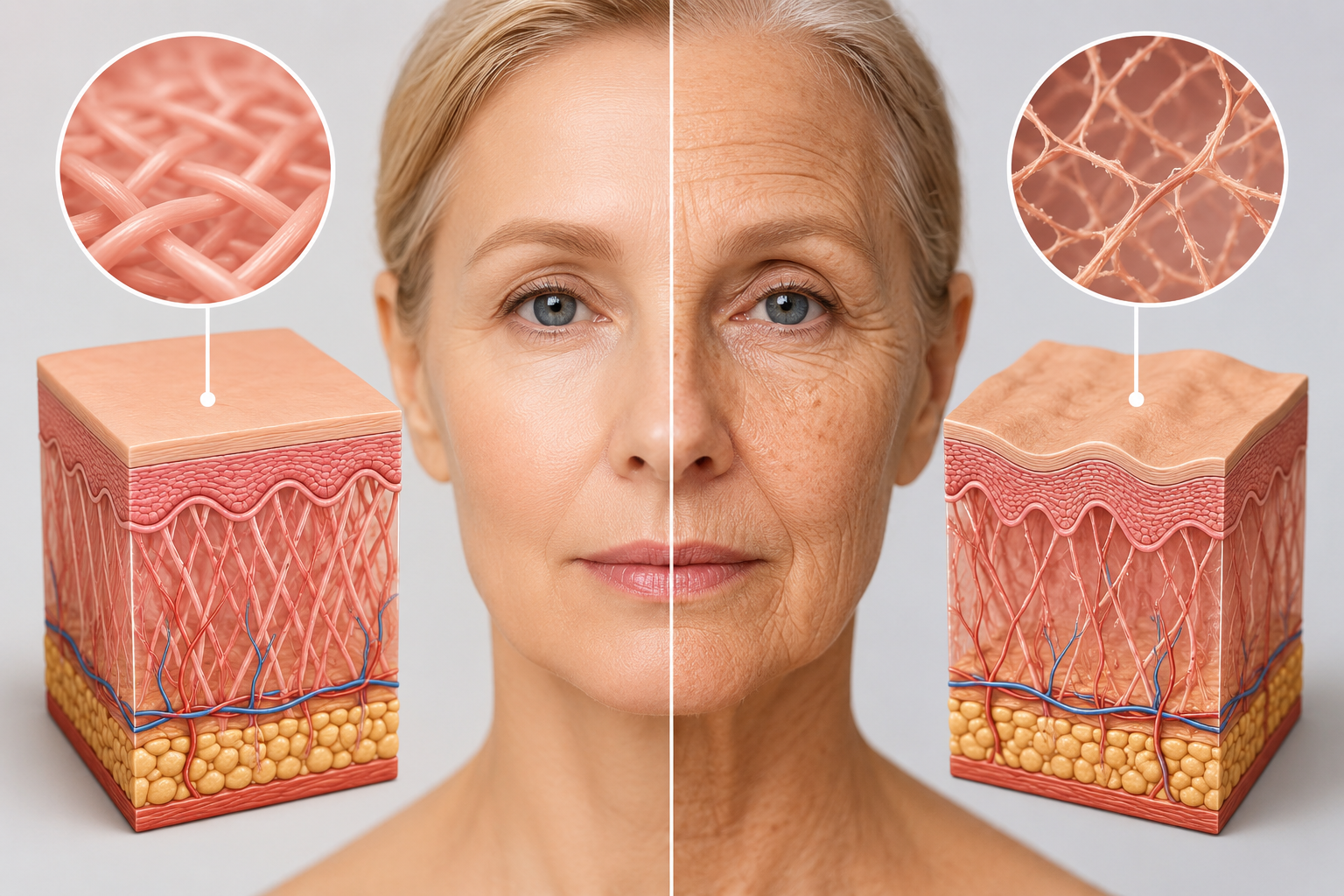
Many adults notice that their skin becomes thinner, drier, and more fragile after the age of 50. Cuts occur more easily, bruises appear with minimal trauma, and veins may become more visible beneath the skin. While these changes are a normal part of aging, understanding why they occur can help you make informed decisions about prevention and treatment.
This article explains the biological mechanisms behind skin thinning after 50, what science says about slowing the process, and the dermatologist-recommended ingredients that may help maintain healthier, stronger skin.
Quick Answer
Skin gets thinner after 50 because the body produces less collagen, elastin, and hyaluronic acid while skin cell turnover slows. Hormonal changes, lifelong UV exposure, and reduced activity of skin fibroblasts gradually weaken both the epidermis and dermis, making skin more fragile, dry, and prone to bruising.
Key Takeaways
- Collagen production declines significantly with age.
- The epidermis becomes thinner due to slower skin cell renewal.
- The dermal-epidermal junction flattens, reducing structural strength.
- Sun exposure accelerates collagen breakdown and skin thinning.
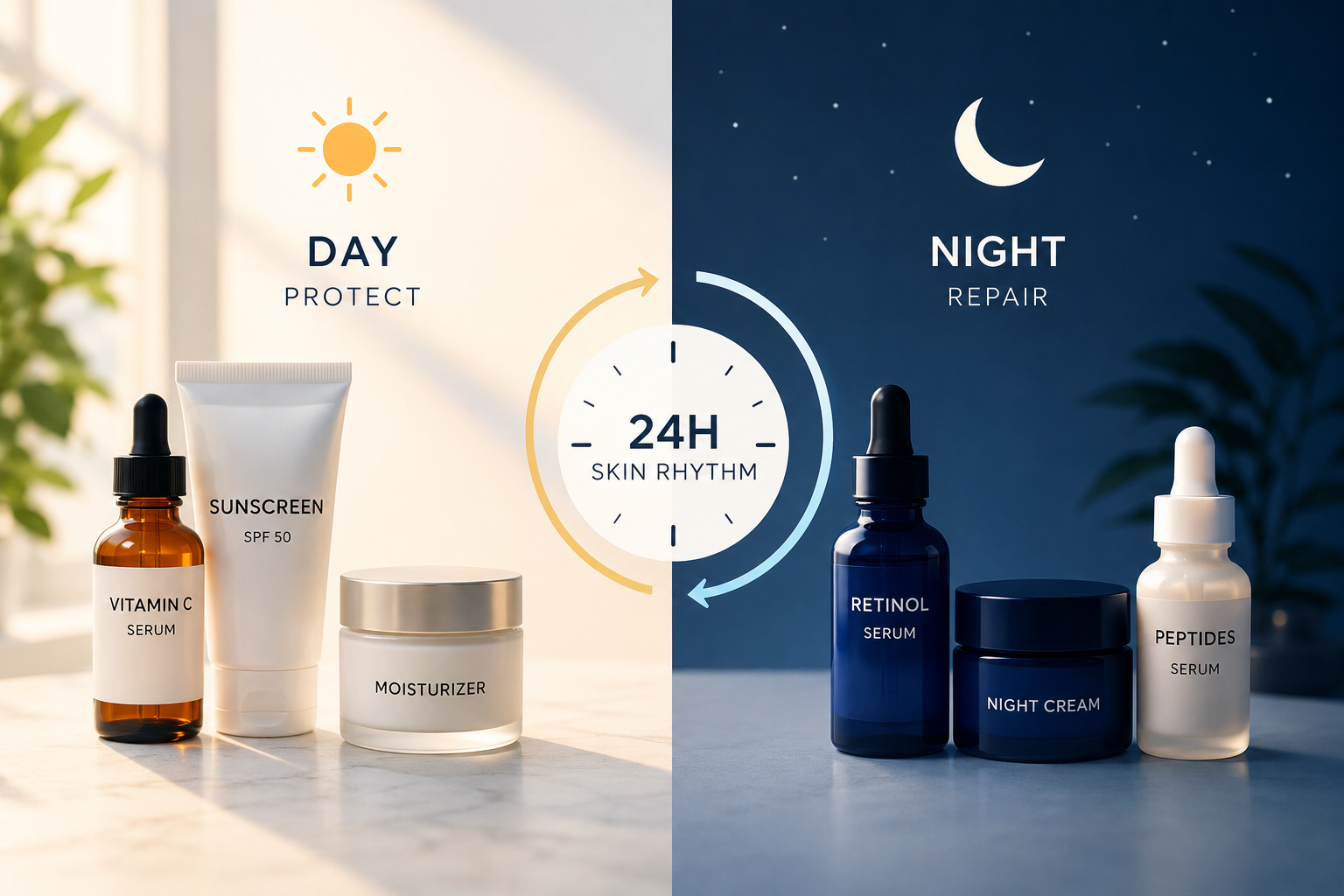
- Retinoids, peptides, daily sunscreen, antioxidants, and adequate protein intake may help support healthier aging skin.
The Biology of Skin Thinning After 50
Healthy skin depends on continuous renewal. Throughout adulthood, new skin cells replace older ones while fibroblasts produce collagen, elastin, and other components of the extracellular matrix (ECM). After approximately age 50, these repair processes become less efficient.
The epidermis gradually becomes thinner because basal keratinocytes divide more slowly. At the same time, fibroblast activity decreases, reducing the production of collagen types I and III, elastin, and glycosaminoglycans such as hyaluronic acid. Together, these changes weaken the skin's structural integrity and reduce its ability to recover from injury.
Research published in Nature and dermatology journals shows that intrinsic aging and cumulative ultraviolet (UV) exposure both contribute to collagen degradation and extracellular matrix remodeling.
Comparison: Young Skin vs. Skin After 50
| Feature | Younger Skin | Skin After 50 |
|---|---|---|
| Cell turnover | Rapid | Slower |
| Collagen production | High | Reduced |
| Elastin quality | Elastic and resilient | Fragmented and weaker |
| Dermal thickness | Greater | Reduced |
| Bruising risk | Lower | Higher |
| Skin healing | Faster | Slower |
The Flattening of the Dermal-Epidermal Junction
The dermal-epidermal junction (DEJ) is the interface connecting the epidermis and dermis. In younger skin, it has a wavy, interlocking structure that improves nutrient exchange and provides mechanical strength.
With aging, this junction gradually flattens. The reduced contact area decreases nutrient delivery to the epidermis while weakening the attachment between skin layers. Consequently, aging skin tears more easily and becomes increasingly vulnerable to friction injuries.
Science Insight: A flatter dermal-epidermal junction reduces mechanical stability, making mature skin more susceptible to bruising, tearing, and delayed wound healing.
Hormonal Changes Also Contribute
Hormonal aging plays an important role in skin thinning, particularly after menopause in women. Declining estrogen levels reduce collagen synthesis, skin hydration, elasticity, and wound healing. Men also experience gradual reductions in hormones that influence skin structure, although these changes typically occur more slowly.
Hormonal decline combines with chronological aging to accelerate loss of dermal thickness over time.
External Factors That Accelerate Skin Thinning
- Chronic ultraviolet (UV) exposure
- Smoking
- Air pollution
- Poor nutrition
- Long-term corticosteroid use
- Poorly controlled diabetes
- Chronic inflammation
Among these, sun exposure remains the largest preventable cause of premature skin thinning because ultraviolet radiation activates enzymes called matrix metalloproteinases (MMPs), which degrade collagen fibers.
How to Reinforce Skin Thickness
1. Use Prescription or Over-the-Counter Retinoids
Retinoids remain the gold standard topical ingredient for improving aging skin. They stimulate fibroblasts, increase collagen synthesis, normalize epidermal turnover, and improve skin thickness over several months of consistent use. Introduce retinoids gradually to minimize irritation.
2. Choose Peptides and Growth Factor-Based Skincare
Peptides act as cellular signaling molecules that encourage collagen production, while certain growth factor formulations may support skin repair. Although evidence varies among products, some clinical studies suggest measurable improvements in skin firmness and texture.
3. Apply Daily Sunscreen
Broad-spectrum SPF 30 or higher remains one of the most effective methods for preventing additional collagen breakdown. Daily sun protection slows photoaging and preserves existing skin structure.
4. Add Antioxidants
Vitamin C, vitamin E, ferulic acid, niacinamide, and other antioxidants help reduce oxidative stress caused by ultraviolet radiation and pollution. Vitamin C also plays an essential role in collagen synthesis.
5. Eat Enough Protein and Vitamin C
Collagen production requires adequate dietary protein, vitamin C, zinc, and copper. A balanced diet containing lean protein, fruits, vegetables, nuts, and healthy fats supports normal skin maintenance.
6. Stay Physically Active
Regular exercise improves circulation, supports healthy aging, and may indirectly benefit skin by enhancing nutrient delivery and reducing chronic inflammation.
What the Science Says
Clinical evidence consistently shows that intrinsic aging reduces collagen production by approximately 1% per year during adulthood. Photoaging from ultraviolet exposure further accelerates collagen degradation through increased activity of matrix metalloproteinases (MMPs). Numerous randomized clinical studies have demonstrated improvements in collagen formation and skin thickness with topical retinoids, while consistent sunscreen use significantly slows visible skin aging.
Common Myths
Myth: Thin skin is completely unavoidable.
Fact: Aging cannot be stopped, but sun protection, retinoids, healthy nutrition, and proper skincare can slow structural decline.
Myth: Moisturizers permanently thicken skin.
Fact: Moisturizers improve hydration and barrier function but do not permanently increase dermal thickness.
Myth: Bruising always means vitamin deficiency.
Fact: Aging skin naturally bruises more easily because the skin and supporting blood vessel structures become thinner.
Who Should Pay Attention?
- Adults over 50
- Postmenopausal women
- People with extensive lifetime sun exposure
- Individuals taking long-term corticosteroids
- People who notice frequent bruising or skin tears
- Anyone seeking healthy aging strategies
Bottom Line
Skin thinning after age 50 is driven by slower skin renewal, declining collagen and elastin production, hormonal changes, and cumulative sun exposure. Although these biological changes are natural, evidence-based skincare—including retinoids, sunscreen, antioxidants, peptides, and good nutrition—can help preserve skin strength, improve resilience, and support healthier aging.
Medical References
- Farage MA, Miller KW, Elsner P, Maibach HI. Intrinsic and extrinsic factors in skin ageing. International Journal of Cosmetic Science. 2008.
- Fisher GJ, Varani J, Voorhees JJ. Looking older: Fibroblast collapse and therapeutic implications. Archives of Dermatology. 2008.
- Quan T, Fisher GJ. Role of age-associated alterations of the dermal extracellular matrix. Nature Reviews Molecular Cell Biology. 2015.
- Kafi R, Kwak HS, Schumacher WE, et al. Improvement of naturally aged skin with topical retinol. Archives of Dermatology. 2007.
- American Academy of Dermatology. Skin care recommendations for aging skin.
- National Institute on Aging. Skin care and aging.