Reviewed by the HyaluFlow Health Editorial Team | Published: June 29, 2026 | Last Updated: August 29, 2026
Quick Answer: Elbows can darken with age because friction, pressure, dryness, and thickened skin affect their texture and appearance. Moisturizing, gentle exfoliation, friction reduction, and pigmentation care can help. Sudden, widespread, or velvety darkening needs medical evaluation.
Key Takeaways
- Friction, pressure, dryness, and thickened skin contribute to dark elbows.
- Irritation can cause post-inflammatory hyperpigmentation.
- Urea can soften thick, dry skin while improving hydration.
- Niacinamide has clinical evidence for improving hyperpigmentation.
- Avoid aggressive scrubbing because irritation can worsen discoloration.
- Sudden or velvety darkening may signal a medical condition.
Why Do Elbows Get Darker With Age?
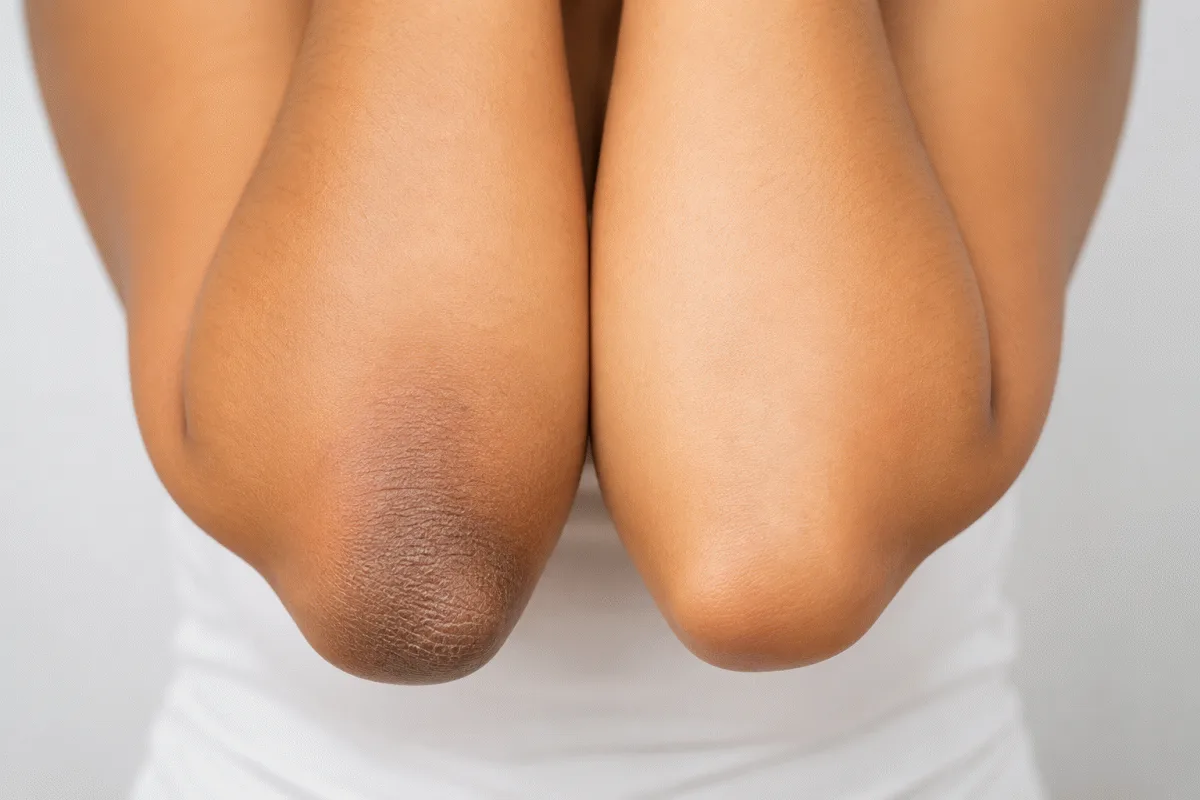
The skin over the joints repeatedly bends, stretches, rubs against clothing and surfaces, and experiences pressure.
Mechanical stress can leave the skin rougher and thicker. Dryness can also make it look darker.
How Friction Can Cause Dark Elbows
Repeated rubbing can trigger inflammation, leaving post-inflammatory hyperpigmentation after irritation settles.
Leaning on desks, tables, armrests, or hard surfaces can maintain this cycle. Reducing friction is more useful than trying to scrub pigment away.
American Academy of Dermatology: Acanthosis Nigricans Causes explains why persistent thickening and darkening may need assessment.
Why Dry Elbows Look Darker
Elbow skin can become dry because the area has few sebaceous glands. A weakened barrier makes scaling more visible.
Urea attracts water and softens the outer keratin layer. DermNet: Urea describes its moisturizing and keratolytic effects for dry skin.
Can Aging Make Dark Elbows More Noticeable?
Aging can make dryness, rough texture, and pigmentation more noticeable as skin hydration and barrier function change.
When Dark Elbows May Signal a Medical Condition
Most isolated dark elbows are harmless, but sudden, spreading, thick, or velvety discoloration warrants evaluation.
Acanthosis nigricans causes darker, thicker, velvety skin and may be associated with prediabetes, diabetes, hormonal conditions, medications, or other health problems. American Academy of Dermatology: Who Gets Acanthosis Nigricans and Causes provides guidance.
Eczema, psoriasis, medication reactions, and other pigmentary disorders can also affect elbow skin. A dermatologist can identify the cause.
How to Get Rid of Dark Elbows Safely
Focus on hydration, less irritation, and pigmentation care.
1. Moisturize Daily
Apply a thick moisturizer after bathing and when elbows feel dry. Urea, glycerin, ceramides, and petrolatum support hydration and reduce roughness.
2. Exfoliate Gently
For rough, thick skin, urea, lactic acid, or salicylic acid may loosen excess scale. Start gradually; do not combine several strong exfoliants.
DermNet: Acquired Keratoderma lists urea, salicylic acid, and lactic acid among topical options for excessive thickening.
3. Consider Niacinamide for Uneven Tone
Niacinamide may improve hyperpigmentation and is generally less aggressive than harsh bleaching approaches. Evidence exists for reduced pigmentation, although much of it comes from facial skin rather than elbows.
British Journal of Dermatology: The Effect of Niacinamide on Reducing Cutaneous Pigmentation reported reduced hyperpigmentation.
4. Reduce Repeated Pressure
If you frequently lean on your elbows, change the habit or use a soft surface to reduce friction.
What the Science Says
Evidence supports treating rough, discolored skin without aggressive scrubbing. Moisturizers and keratolytics improve thick, dry skin, while selected ingredients may improve uneven tone.
Randomized research supports niacinamide for hyperpigmentation, while azelaic acid has evidence for pigment reduction in darker skin types. Niacinamide Clinical Study and Azelaic Acid 20% Cream Randomized Clinical Trial provide relevant evidence.
Common Myths
Myth: Dark elbows mean poor hygiene.
Fact: Friction, dryness, thickening, inflammation, and pigmentation are common explanations.
Myth: Scrubbing harder removes dark elbows.
Fact: Excessive friction can irritate skin and worsen discoloration.
Myth: Lemon juice is a safe elbow lightener.
Fact: Irritating remedies can damage the skin barrier and worsen pigmentation.
Myth: Dark elbows always mean diabetes.
Fact: Dark elbows are not automatically a sign of diabetes, but velvety or widespread darkening can require evaluation.
Who Should Pay Attention?
Seek advice if discoloration rapidly changes, spreads, becomes thick or velvety, or occurs with persistent itching, scaling, or other new symptoms.
If you have a skin condition or take medication linked to pigmentation changes, seek professional advice.
Evidence Strength Summary
- Strong: Urea has established moisturizing and keratolytic effects for dry, thickened skin.
- Moderate: Topical niacinamide can improve hyperpigmentation.
- Moderate: Azelaic acid has clinical evidence for reducing pigmentation.
- Strong: Acanthosis nigricans can be associated with metabolic and hormonal conditions.
- Limited: Evidence specifically for isolated dark elbows is less extensive than evidence for facial pigmentation or generalized dry skin.
Bottom Line
Dark elbows are commonly linked to friction, dryness, thickening, and pigmentation rather than poor hygiene.
Use daily moisturizer, gentle keratolytic care, reduced friction, and a tolerable ingredient such as niacinamide. Sudden, thick, velvety, widespread, or symptomatic darkening should be evaluated.