Why Muscles Hurt Most 2 Days After a Workout (Not the Next Day)
If your muscles feel worse on day two after a hard workout than they did on day one, don't worry—this is completely normal. It's called Delayed Onset Muscle Soreness (DOMS). It commonly occurs after unfamiliar or intense exercise, such as starting a new workout routine, lifting heavier weights, or running farther than usual.
What Causes the Soreness?
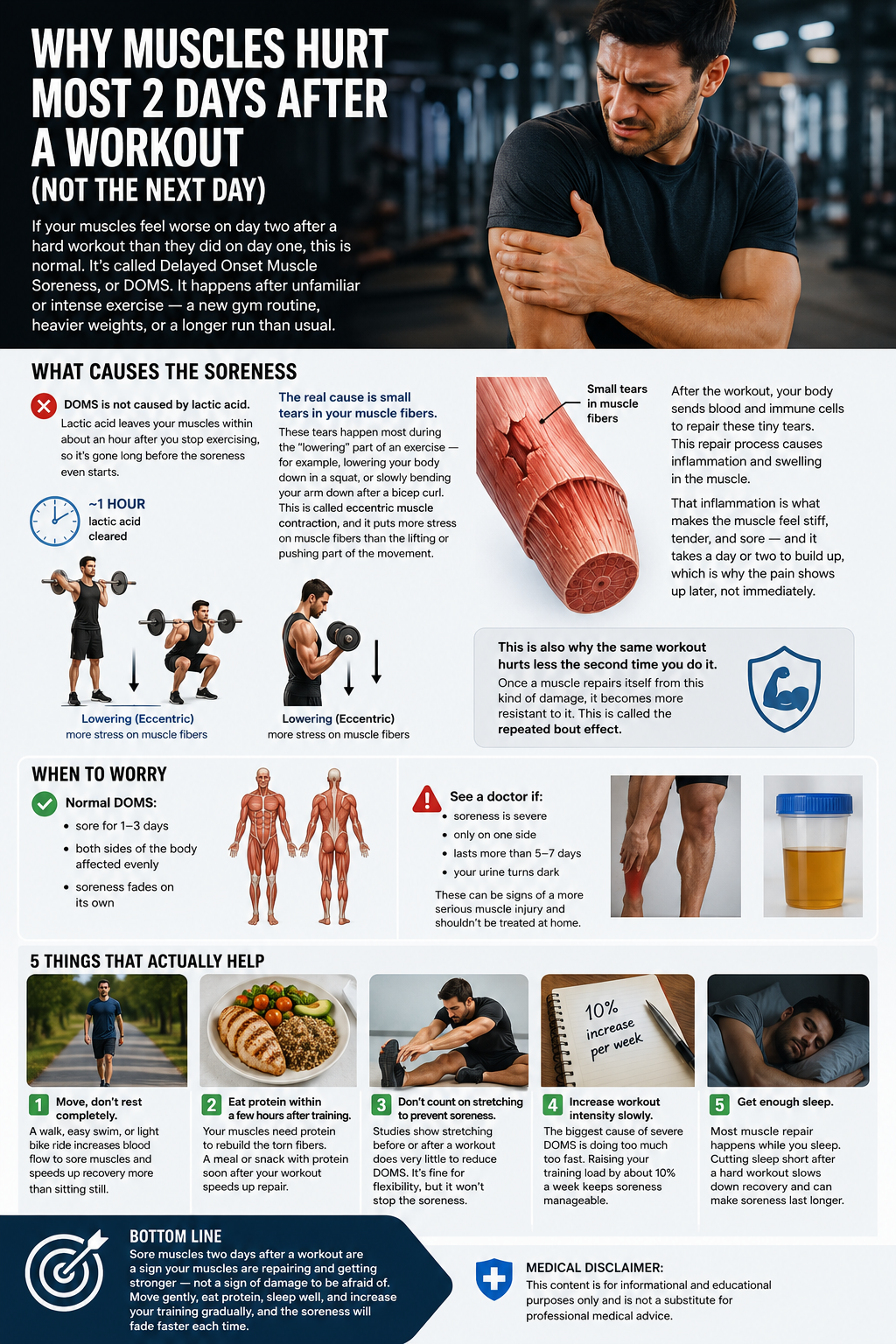
Despite the common myth, DOMS is not caused by lactic acid. Lactic acid leaves your muscles within about an hour after you stop exercising, so it's long gone before soreness begins.
The real cause is tiny tears in your muscle fibers. These tears happen most during the eccentric (lowering) phase of an exercise—for example, lowering yourself into a squat or slowly lowering a dumbbell after a bicep curl. This part of the movement places more stress on muscle fibers than the lifting or pushing phase.
After your workout, your body sends blood and immune cells to repair these microscopic tears. This healing process causes inflammation and mild swelling, making your muscles feel stiff, tender, and sore. Because inflammation takes time to develop, soreness usually peaks 24 to 48 hours after exercise rather than immediately afterward.
This is also why repeating the same workout becomes less painful over time. Once your muscles repair themselves, they become more resistant to future soreness from the same activity. This adaptation is known as the repeated bout effect.
When Should You Be Concerned?
Normal DOMS
- Soreness lasts 1–3 days.
- Both sides of the body are affected evenly.
- The discomfort gradually fades on its own.
See a Doctor If
- The soreness is severe or getting worse.
- Only one side of the body is affected.
- The pain lasts longer than 5–7 days.
- Your urine becomes dark in color.
These symptoms may indicate a more serious muscle injury that should not be treated at home.
5 Things That Actually Help
1. Move, Don't Rest Completely
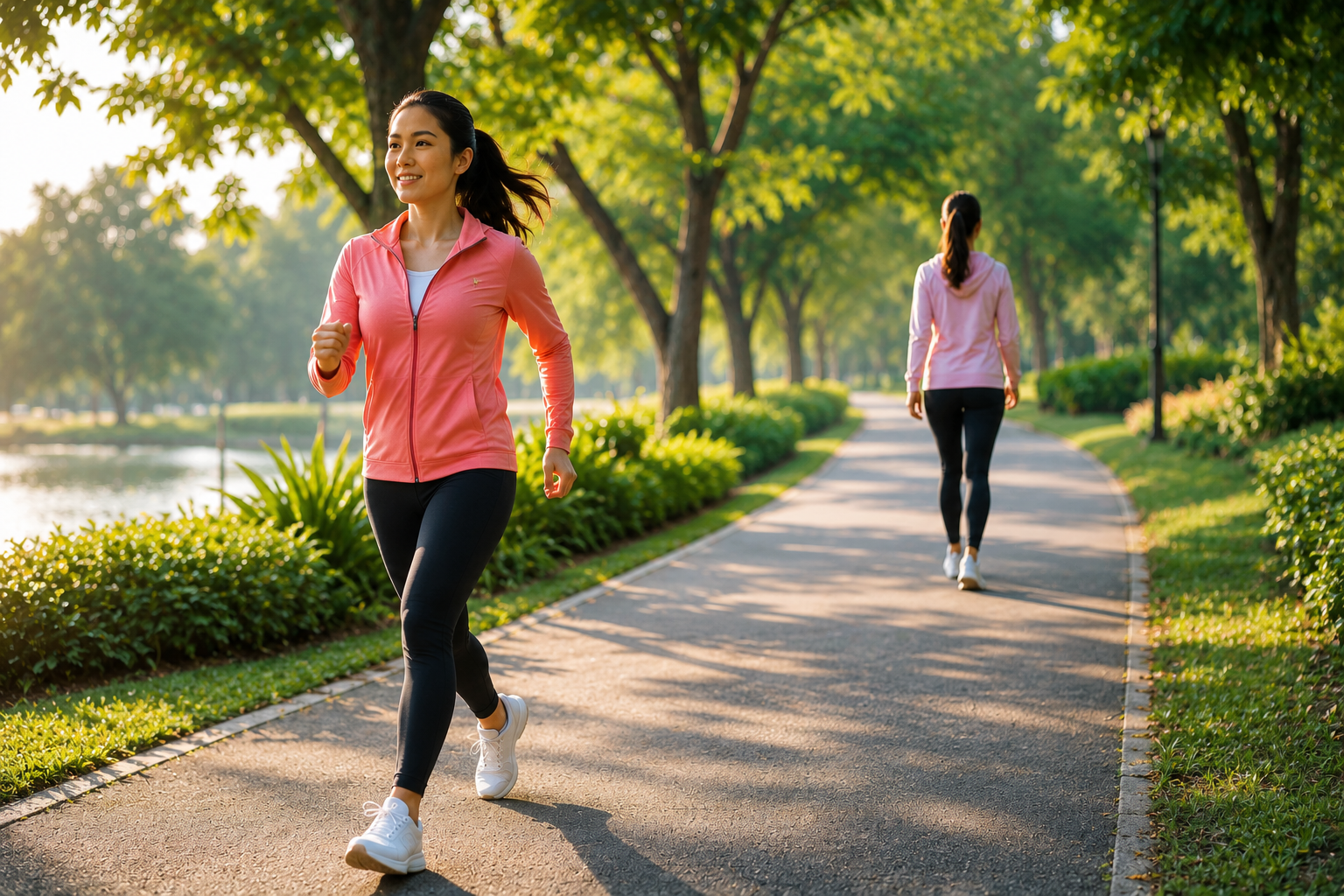
A gentle walk, easy swim, or light bike ride increases blood flow to sore muscles and often helps speed up recovery better than complete rest.
2. Eat Protein After Training
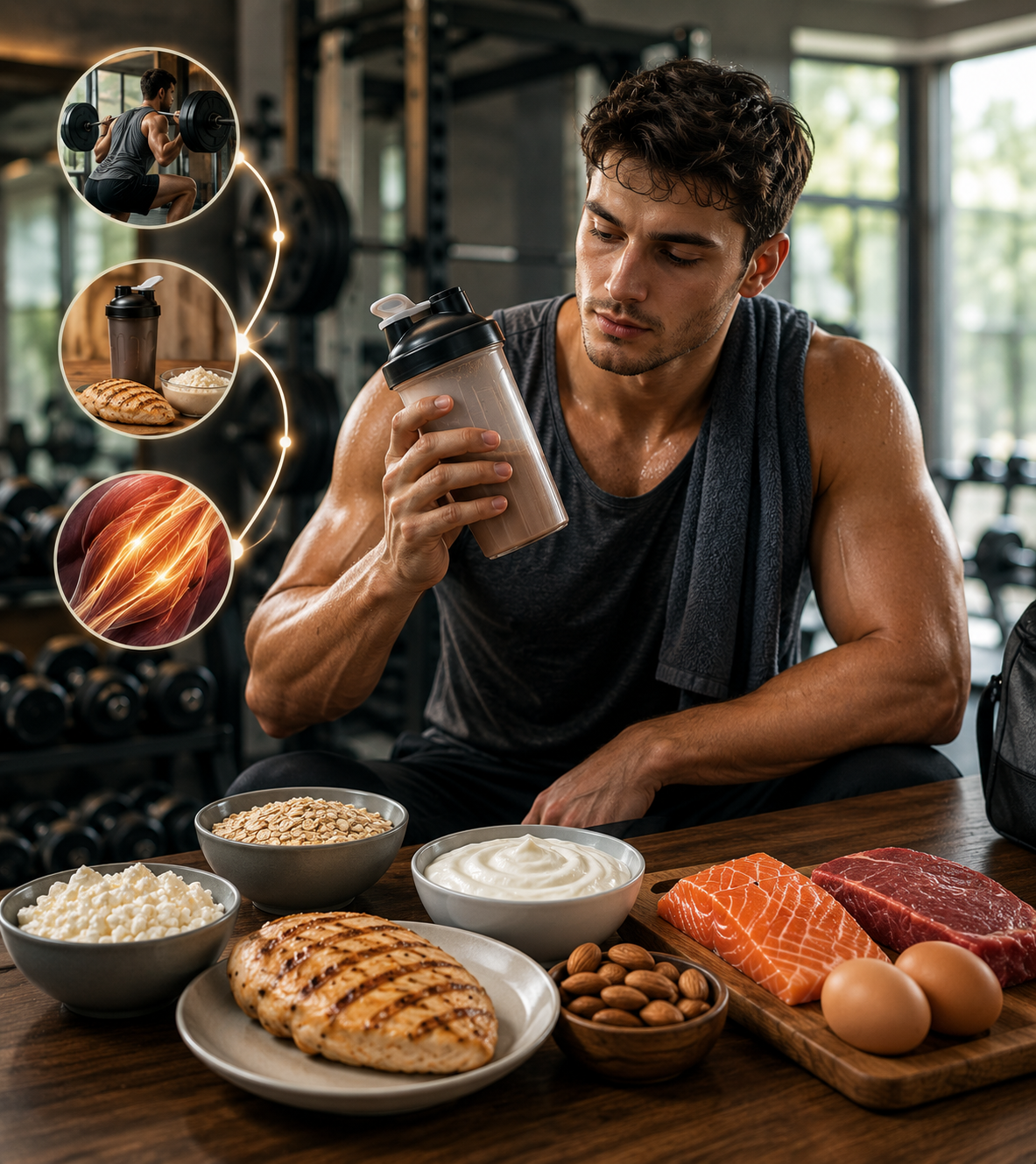
Your muscles need protein to rebuild damaged fibers. Eating a protein-rich meal or snack within a few hours after your workout supports faster recovery.
3. Don't Count on Stretching Alone
Research shows that stretching before or after exercise does very little to prevent DOMS. It's excellent for flexibility but won't significantly reduce muscle soreness.
4. Increase Workout Intensity Gradually
One of the biggest causes of severe DOMS is doing too much too quickly. Increasing your training load by about 10% each week allows your muscles to adapt while keeping soreness manageable.
5. Get Enough Sleep
Most muscle repair happens while you sleep. Consistently getting enough quality sleep helps your muscles recover faster and may reduce how long soreness lasts.
Bottom Line
Feeling sore two days after a workout is a normal sign that your muscles are repairing and adapting—not something to fear. Keep moving gently, eat enough protein, prioritize good sleep, and increase your training gradually. Over time, your body will adapt, and the same workouts will leave you feeling less sore.