Medically reviewed by the HyaluFlow Health Editorial Team | Published: August 3, 2026 | Last Updated: August 26, 2026
Quick Answer
Exosome therapy is a promising but still experimental approach to hair restoration. Early clinical studies report improvements in hair density and thickness, but small samples, different products, short follow-up, and limited controlled trials mean it is not yet established as a standard treatment for pattern hair loss.
Key Takeaways
- Exosomes are extracellular vesicles that carry biological signals between cells.
- Laboratory research suggests they may influence pathways involved in hair follicle growth and inflammation.
- Small human studies have reported increased hair density and thickness.
- Products, doses, sources, and treatment methods vary considerably.
- Exosomes should not be marketed as a proven cure or guaranteed replacement for established treatments.
What Are Exosomes?
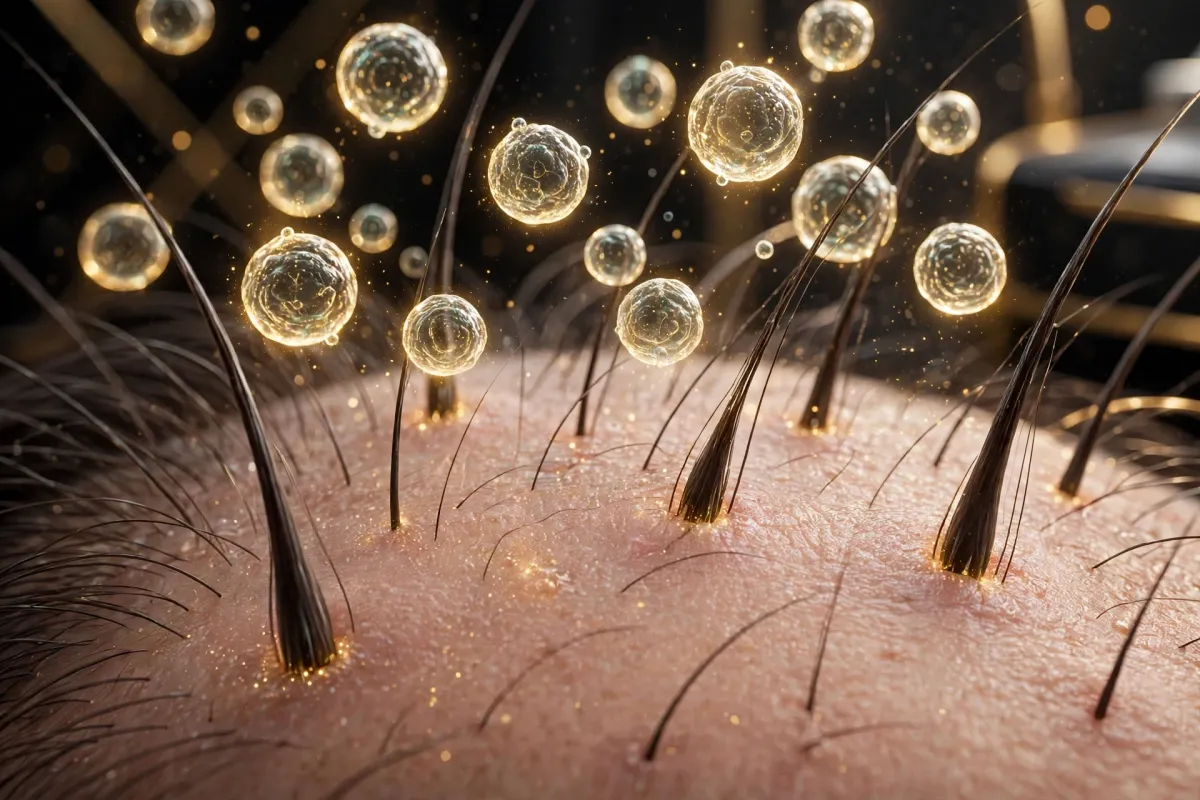
Exosomes are small extracellular vesicles released by cells. They carry proteins, lipids, messenger RNA, and microRNA that can influence how recipient cells behave.
That makes them interesting in regenerative medicine, because cell-derived signals may affect inflammation, tissue repair, and cellular communication. A foundational review in Annual Review of Biochemistry: "Exosomes" describes their role in intercellular communication.
How Might They Affect Hair Growth?
Pattern hair loss involves progressive follicle miniaturization and changes in the hair-growth cycle. Researchers are investigating whether exosomes can influence dermal papilla cells, follicular signaling, inflammation, and pathways involved in regeneration.
Preclinical research has explored mechanisms including Wnt/β-catenin signaling and other pathways involved in follicle activity. However, results from laboratory or animal models cannot automatically be translated into proven benefits in humans.
A 2026 systematic review in Molecular Biology Reports: "Exosome-driven treatments for hair regrowth in androgenetic alopecia" found encouraging biological and early clinical findings, while emphasizing inconsistent study designs, small samples, and the need for larger randomized trials.
What Does Current Research Show?
The human evidence is promising but thin. A 2025 systematic review identified 11 clinical studies, including only two randomized controlled trials, and found improvements in at least one hair-growth measure across the included studies.
Importantly, the review also found substantial variation in exosome sources, preparation methods, outcomes, and follow-up. That makes it difficult to determine which formulation, dose, or delivery method works best.
One prospective study involving 30 men with androgenetic alopecia reported increased hair density after foreskin-derived mesenchymal stromal cell exosome injections, but it was a small study without the strength of a large randomized controlled trial.
Clinical and Cosmetic Investigative Dermatology: "Exosomes and Hair Regeneration" therefore concludes that more standardized, high-quality research is needed before firm conclusions about efficacy can be made.
Exosomes vs PRP
| Feature | Exosomes | PRP |
|---|---|---|
| Source | Extracellular vesicles | Patient's blood |
| Evidence | Early and limited | More established |
| Standardization | Highly variable | Also variable, but more studied |
| Proven superiority | Not established | Not applicable |
It is premature to claim that exosomes outperform PRP. Exosome research is newer, while PRP has a substantially larger clinical literature.
Safety and Regulatory Concerns
Published hair studies have generally reported mild or no serious treatment-related events, but that does not establish long-term safety. Product quality is another major concern because different clinics may use biologic materials with very different sources and manufacturing standards.
The U.S. FDA states that there are currently no FDA-approved exosome products and has warned consumers about unapproved products marketed as exosome therapies. Regulatory status also varies by country, so patients should verify what applies where they live.
What the Science Says
Evidence strength: Low to emerging. The biological rationale is credible, and early human studies are encouraging, but the evidence remains limited by small populations, heterogeneous products, inconsistent protocols, and insufficient long-term data.
The strongest current conclusion is not that exosomes "regrow hair," but that they are a potentially useful regenerative strategy that requires better clinical validation.
Common Myths
Myth: Exosomes create brand-new follicles.
Fact: Current evidence does not show that exosome treatment can reliably create new human hair follicles where follicles have been permanently lost.
Myth: One session permanently cures pattern hair loss.
Fact: There is no strong evidence supporting a permanent cure. Pattern hair loss remains a chronic condition.
Myth: Exosomes are FDA-approved for hair loss.
Fact: The FDA currently lists no FDA-approved exosome products.
Who Should Pay Attention?
People considering exosome therapy should be especially cautious of clinics promising guaranteed regrowth, permanent results, or superiority over every established treatment.
A dermatologist should first confirm the cause of hair loss and discuss evidence-based options. Exosome therapy is best viewed as an emerging treatment, not a guaranteed solution.
Bottom Line
Exosome therapy has genuine scientific potential, but the marketing is currently ahead of the evidence. Early studies suggest possible improvements in hair density and thickness, yet larger controlled trials and standardized products are still needed.
If you are considering treatment, judge the clinic by its medical assessment, product transparency, regulatory compliance, and willingness to discuss uncertainty, not by dramatic before-and-after photographs.