Reviewed by the HyaluFlow Health Editorial Team | Published: October 30, 2026 | Last Updated: October 30, 2026
Quick Answer: The most effective way to get rid of blackheads on your nose is to use a gentle cleanser and a product containing salicylic acid or a topical retinoid. Avoid squeezing, harsh scrubs, and excessive exfoliation. Consistent skincare can improve blackheads over several weeks, although results vary.
Key Takeaways
- Blackheads form when oil and dead skin cells clog an open pore.
- Salicylic acid helps unclog pores, while retinoids help prevent blockages.
- Pore strips provide temporary results rather than long-term treatment.
- Some tiny dots on the nose are normal sebaceous filaments, not blackheads.
What Causes Blackheads on the Nose?
Blackheads, medically known as open comedones, develop when excess oil and dead skin cells accumulate inside a hair follicle. The opening remains exposed to air, causing the material inside to darken. The American Academy of Dermatology explains that blackheads are not dirt, so scrubbing harder will not remove them.
The nose can be particularly prone to blackheads because it contains many oil-producing glands. Hormonal changes, naturally oily skin, and pore-clogging skincare products can contribute to their development.
1. Use Salicylic Acid to Unclog Pores
Salicylic acid is a useful ingredient for blackheads because it helps exfoliate inside pores and loosen the buildup that contributes to blockages. It is available in cleansers, gels, and leave-on treatments.
If you are new to it, start with a low-strength product and follow its directions. Begin a few times per week if your skin is sensitive, then adjust according to tolerance. Avoid combining several exfoliating products at once.
2. Consider a Topical Retinoid
Topical retinoids help normalize skin-cell turnover and prevent pores from becoming clogged. The AAD identifies retinoids, including over-the-counter adapalene in some countries, as treatments for blackheads and whiteheads. See its guidance on acne treatments.
Introduce a retinoid gradually and use moisturizer to reduce dryness and irritation. Do not start multiple strong acne treatments together. If you are pregnant or trying to become pregnant, consult a healthcare professional before using acne treatments, and avoid topical retinoids during pregnancy.
3. Follow a Gentle Skincare Routine
A simple routine can help reduce pore congestion without stripping your skin.
- Morning: Wash with a gentle cleanser, apply moisturizer, and finish with broad-spectrum SPF 30 or higher sunscreen.
- Evening: Cleanse gently, apply your chosen blackhead treatment as directed, and use moisturizer.
Choose products labeled non-comedogenic when possible. If your skin becomes tight, flaky, or irritated, reduce the frequency of active ingredients rather than scrubbing more. Our guide to choosing skincare products for dry skin explains how to support moisture while treating skin concerns.
4. Do Pore Strips and Nose Scrubs Work?
Pore strips can temporarily lift material from the surface of pores, making the nose look smoother. However, they do not address the underlying causes of blackheads, and repeated use may irritate sensitive skin. Cleveland Clinic's blackhead guidance discusses their limitations.
Avoid rough scrubs, baking soda, toothpaste, and other harsh DIY remedies. They can irritate your skin without reliably preventing new blackheads.
5. Blackheads or Sebaceous Filaments?
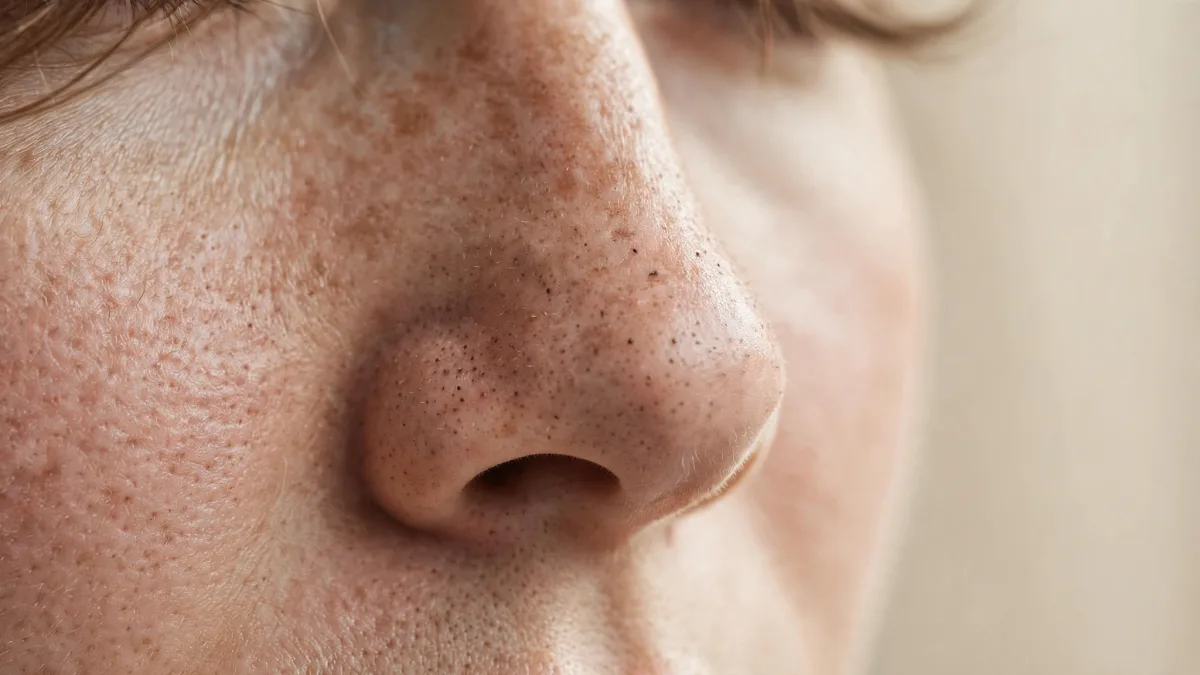
Not every dark dot on your nose is a blackhead. Sebaceous filaments are normal structures that help move oil to the skin's surface. They often appear as tiny, flat, evenly distributed grayish or yellowish dots, while blackheads tend to look darker and more distinct.
Cleveland Clinic explains the difference between sebaceous filaments and blackheads. Sebaceous filaments cannot be permanently eliminated, and squeezing them can irritate or damage the skin.
How Long Does It Take to See Results?
Give a consistent acne treatment around six to eight weeks before judging its effectiveness, unless irritation develops. You may need longer to see clearer skin, and maintenance is often necessary to prevent new blackheads.
If blackheads persist despite consistent care, or you develop painful acne, scarring, or significant irritation, consult a dermatologist. Professional extraction may help when performed safely.
Final Thoughts
Learning how to get rid of blackheads on nose starts with the right ingredients and a gentle routine. Salicylic acid and topical retinoids can help manage clogged pores, while avoiding squeezing and harsh exfoliation protects your skin. Remember that some visible pores and sebaceous filaments are normal, so the goal is healthier skin rather than perfectly poreless skin.