Reviewed by the HyaluFlow Health Editorial Team | Published: September 12, 2026 | Last Updated: September 12, 2026
Quick Answer
Dermaplaning is a cosmetic exfoliation technique that uses a blade to remove fine facial hair, known as vellus hair, along with superficial dead skin cells. It can temporarily make skin feel smoother and help create a more even surface for makeup.
Dermaplaning can be useful for people who want to remove peach fuzz and improve the appearance of dull or rough skin. However, it can also cause irritation, breakouts, infection, scarring or changes in skin color if performed improperly or on unsuitable skin.
Key Takeaways
- Dermaplaning removes peach fuzz and superficial dead skin cells.
- It can temporarily make skin feel smoother and brighter.
- It does not make facial hair grow back thicker or darker.
- Active acne, eczema flares, open wounds and irritated skin are reasons to postpone dermaplaning.
- Overdoing exfoliation can increase irritation and damage the skin barrier.
- Moisturizer and daily sunscreen are especially important after exfoliation.
- Professional dermaplaning is different from casually shaving the face at home.
What Is Dermaplaning?
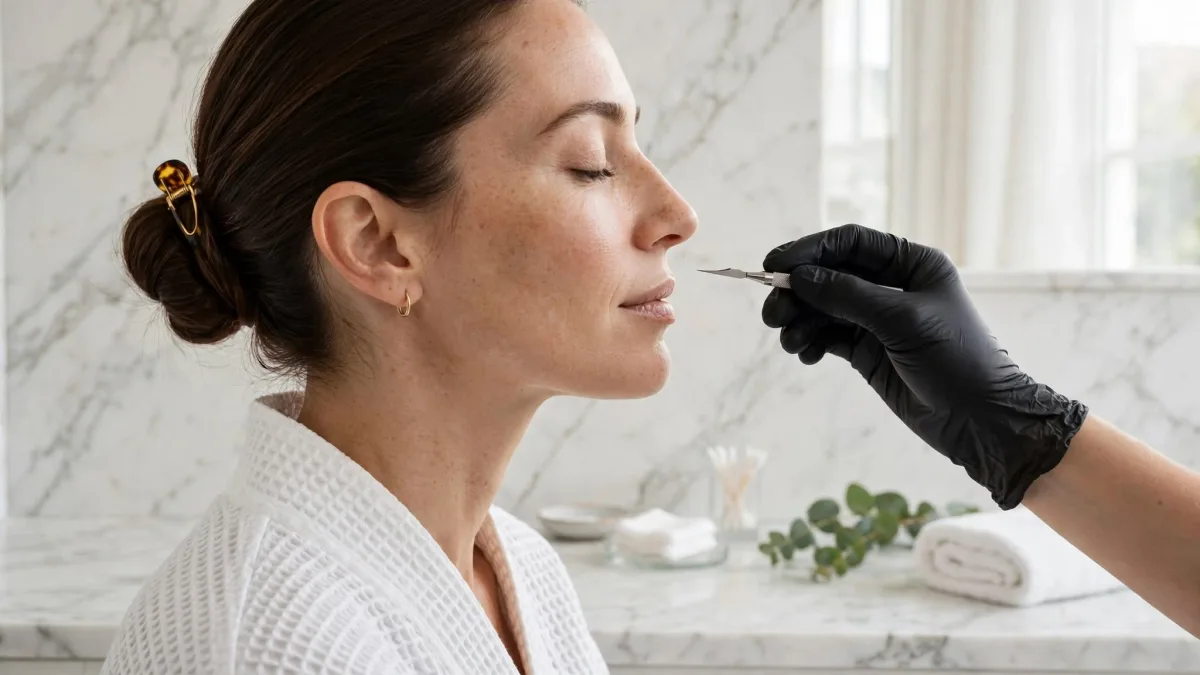
Dermaplaning is a minimally invasive cosmetic procedure that uses a specialized blade to gently remove the outermost layer of skin and fine facial hair. Professional treatment may be performed by a trained healthcare or cosmetic professional, while at-home versions generally involve a small facial razor.
The treatment is sometimes chosen for dull-looking skin, peach fuzz, superficial unevenness and certain cosmetic concerns. Professional dermaplaning can also be used as part of skin resurfacing, although it is not the same procedure as dermabrasion or microdermabrasion. Cleveland Clinic explains that dermaplaning removes the uppermost layers of skin.
Dermaplaning Benefits for Skin
One of the main attractions of dermaplaning is the immediate feel of smoother skin. Removing superficial dead cells and fine facial hair can create a softer surface and may make makeup application look more even.
Dermaplaning may also temporarily improve the appearance of dull skin. By removing surface buildup, it can give the skin a fresher appearance without changing the underlying structure of the skin.
Professional dermaplaning may also be used to reduce the appearance of certain superficial skin imperfections. However, it should not be presented as a cure for acne scars, wrinkles or other skin conditions. Results depend on the individual and the treatment being performed.
Dermaplaning for Facial Hair and Peach Fuzz
Dermaplaning is particularly popular for removing peach fuzz, the fine vellus hair that naturally grows on the face. The blade cuts the hair at the skin's surface rather than removing it from the follicle.
That means the result is temporary. As the hair grows back, it may initially feel slightly different because the cut end is blunt. This does not mean dermaplaning has changed the hair follicle or caused the hair to become permanently thicker or darker. Cleveland Clinic notes that shaving or dermaplaning does not change how vellus hair grows.
Dermaplaning can therefore be useful if facial hair is the main concern, but it is not a permanent hair-removal method. Options such as electrolysis work differently because they target the hair follicle rather than simply cutting the hair at the surface.
Dermaplaning Risks and Side Effects
Dermaplaning is not completely risk-free. Temporary redness, sensitivity and irritation can occur, particularly when the skin is already sensitive or when excessive pressure is used.
More significant complications can include infection, scarring and changes in skin pigmentation. Professional treatment should therefore be approached as a cosmetic procedure rather than simply another step in a skincare routine. Cleveland Clinic lists infection, scarring and skin discoloration among potential risks.
At-home dermaplaning also requires attention to hygiene. A contaminated or poorly handled blade can introduce bacteria, while aggressive passes over the same area can increase irritation.
The American Academy of Dermatology also warns that excessive exfoliation can leave skin irritated and recommends choosing an exfoliation method based on individual skin type and sensitivity. American Academy of Dermatology: Safely Exfoliate at Home
Who Should Avoid Dermaplaning?
Dermaplaning is not appropriate for everyone. People with active acne, open cuts, irritated skin or an active eczema flare should generally avoid exfoliating the affected area until the skin has recovered.
Extra caution is also important for people who develop dark marks easily after irritation or inflammation. Aggressive exfoliation can increase the risk of pigmentation changes in some people, particularly when the skin is already vulnerable.
If you're unsure whether your skin is suitable for exfoliation, a dermatologist can assess your skin and recommend an appropriate approach. This is particularly important before professional cosmetic procedures.
Dermaplaning Aftercare
After dermaplaning, keep the routine simple. Use a gentle cleanser, a moisturizer that your skin already tolerates well, and broad-spectrum sunscreen during the day.
Avoid immediately piling on multiple potentially irritating products. Strong exfoliating acids, retinoids and other active ingredients may be too irritating for freshly exfoliated skin, especially if your skin is sensitive.
The American Academy of Dermatology recommends moisturizing after exfoliation and avoiding over-exfoliation because excessive exfoliation can leave skin red and irritated. American Academy of Dermatology: Exfoliation Guidelines
Sun protection is particularly important because irritated or recently exfoliated skin can be more vulnerable to environmental exposure. If your routine already includes products for pigmentation or skin renewal, give your skin time to settle before returning to an aggressive routine.
How Often Should You Dermaplane?
More dermaplaning does not automatically mean better skin. The appropriate frequency depends on the method used, your skin's sensitivity and how quickly it recovers.
For at-home dermaplaning, Cleveland Clinic's dermatologist guidance recommends not doing it more than once a week and emphasizes allowing facial skin time to recover. Cleveland Clinic: Dermaplaning at Home
Professional dermaplaning should be scheduled according to the advice of the qualified professional performing the treatment. Do not treat a calendar-based schedule as a universal rule for every skin type.
Dermaplaning vs. Shaving
Dermaplaning and facial shaving both remove hair from the surface, but professional dermaplaning can also remove superficial dead skin cells. The tools, technique and intended treatment depth can therefore differ.
Ordinary facial shaving is primarily a hair-removal method. Dermaplaning is generally marketed as a combination of surface hair removal and exfoliation.
Neither method permanently changes facial hair growth. If your main goal is simply removing peach fuzz, basic facial shaving may be enough. If your goal also involves superficial exfoliation, dermaplaning may provide an additional cosmetic benefit.
The key is technique. Scraping the skin aggressively does not produce better results and can increase irritation.
Is Dermaplaning Worth It?
Dermaplaning can be worthwhile if your main goals are temporarily smoother-feeling skin and removal of fine facial hair. It is particularly appealing because the cosmetic effect can be noticeable soon after treatment.
However, it is not a miracle treatment. It cannot permanently remove facial hair, stop aging or guarantee improvement in acne scars. The biggest benefit for many people is simply creating a smoother skin surface.
If you have sensitive, acne-prone or easily irritated skin, a gentler exfoliation strategy may be more appropriate. When considering professional treatment, prioritize a qualified provider and ask about risks, recovery and aftercare rather than choosing based only on price. American Academy of Dermatology recommends discussing procedure risks, recovery and aftercare with a qualified dermatologist.